What changes when simulation is fully integrated with automation systems?
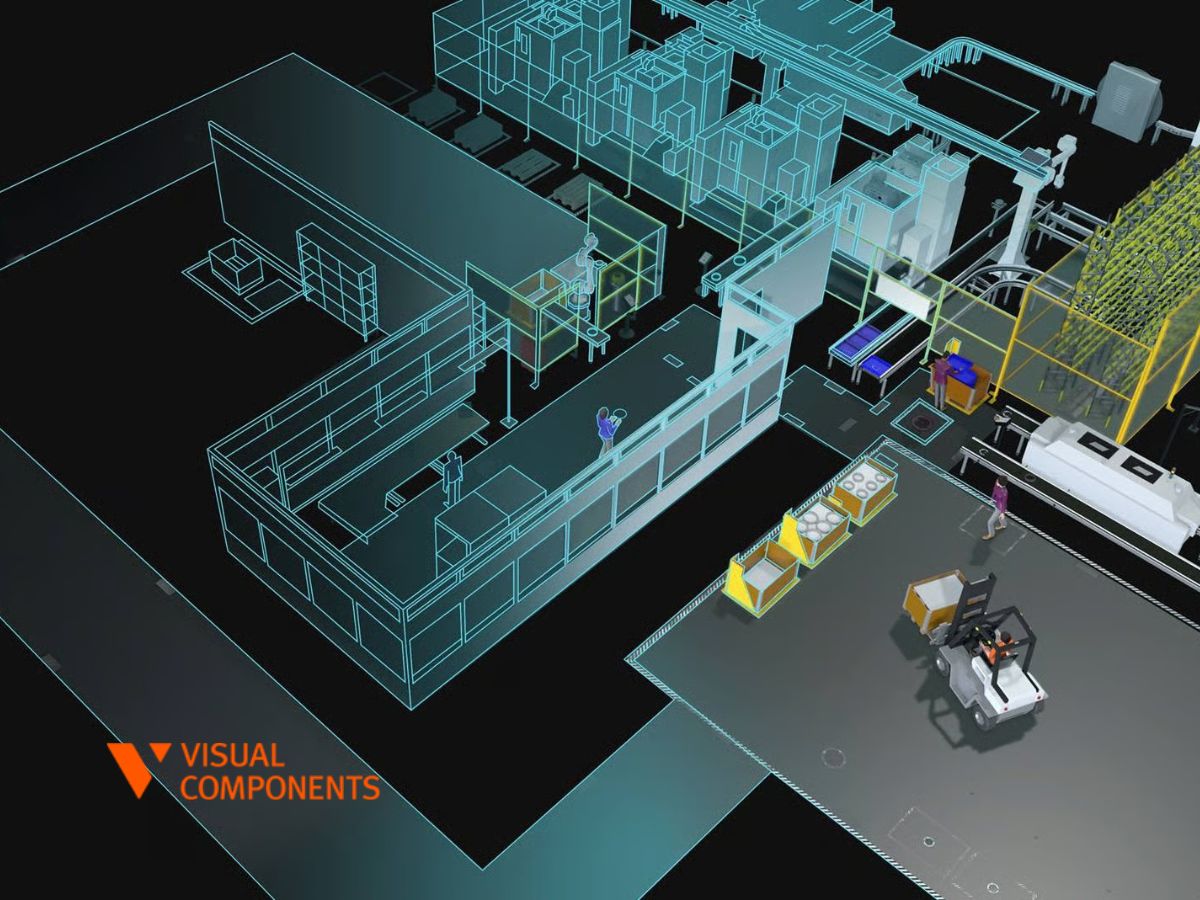
Visual Components 5.0 introduces a tangible evolution in the use of industrial simulation and the Digital Twin, addressing one of the most pressing needs for modern companies: enabling a more seamless, reliable, and more effective and operational integration between virtual models and real-world systems within decision-making processes.
In an increasingly complex industrial landscape, the value of simulation is no longer limited to system representation. Instead, it lies in the ability to test, validate, and make informed decisions before real-world implementation. This is precisely where the new release delivers a significant step forward.
So, what has actually changed in Visual Components 5.0?
The main advancements can be grouped into three core areas: performance, integration, and robot programming.
Performance and Workflow
Visual Components 5.0 improves the management of complex models and integrates different design phases into a single environment.
| Feature | Description | Operational Impact |
|---|---|---|
| Simulation Performance | More efficient handling of complex models and extended layouts | Smoother and more scalable simulations |
| Integrated Workflow | Single environment for simulation, layout, robotics, and commissioning | Reduced transitions between tools |
Integration and Real-Time Data
The release strengthens the connection between the Digital Twin and real systems.
| Feature | Description | Operational Impact |
|---|---|---|
| Robot & PLC Connectivity | New connectors for automation systems | Easier integration with real production environments |
| MQTT | Support for real-time data exchange | Models more closely aligned with real-world behavior |
Robot Programming and Virtual Commissioning
Robot programming and process validation are increasingly performed in the digital phase.
| Feature | Description | Operational Impact |
|---|---|---|
| OLP with MBD/PMI | Automatic generation from CAD data | Reduced manual effort |
| Path Planning | Automatic collision-free trajectory generation | Increased safety |
| Virtual Commissioning | End-to-end validation | Reduced risk before go-live |
From Descriptive Model to Operational Digital Twin
One of the most common limitations of simulation models is the time and complexity required to connect them to automation systems. With version 5.0, Visual Components overcomes this constraint by introducing:
- Extended connectivity with robots and PLCs
- MQTT support for real-time data exchange
- Greater interoperability with industrial systems
This enables a transition from a static and purely descriptive model — disconnected from the plant — to an operational Digital Twin, capable of interacting with control logic and accurately representing real system behavior (see article: Difference between Digital Model and Digital Twin)
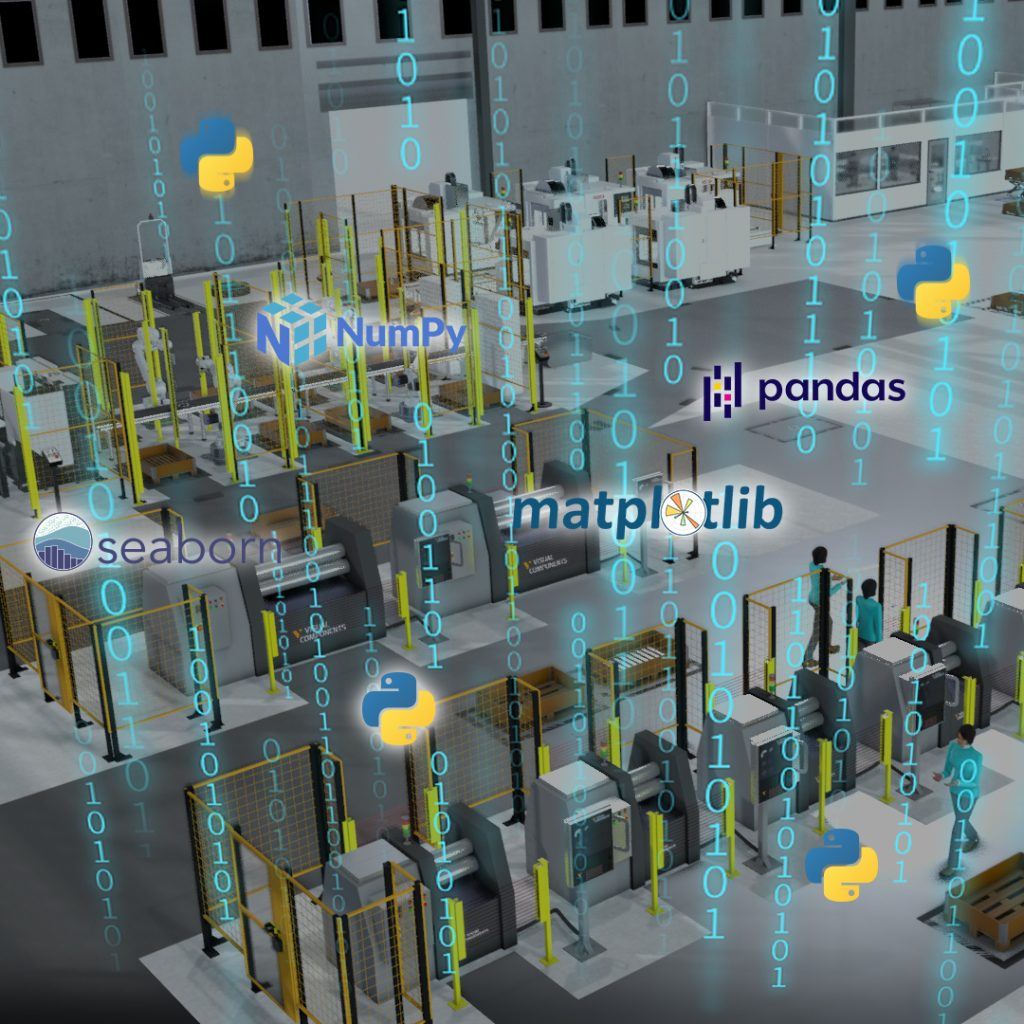
Simulation therefore becomes a concrete tool for Virtual Commissioning, allowing validation of control logic and system behavior before plant start-up.
Robot Offline Programming: Anticipating Critical Activities
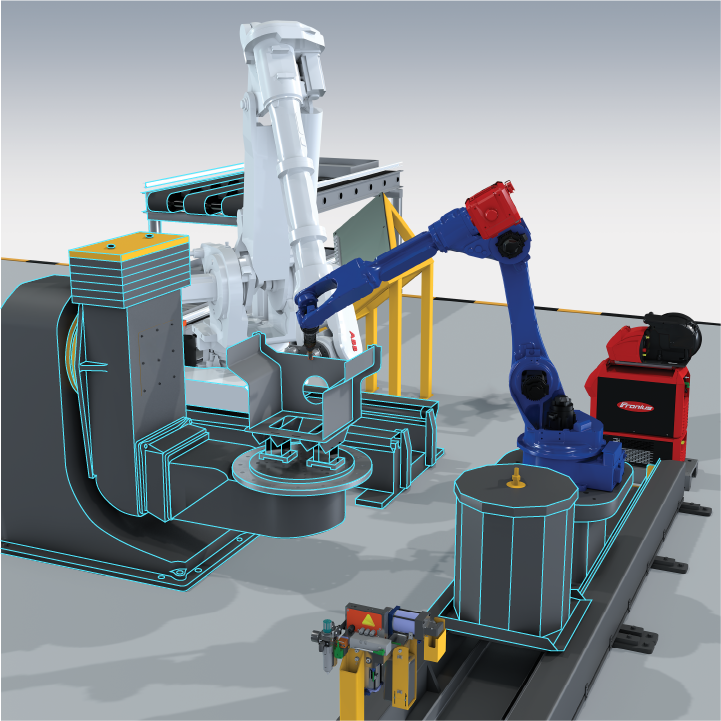
The release also introduces a significant evolution in robot offline programming, increasingly integrated into the design phase.
Thanks to automatic trajectory generation from CAD data (MBD/PMI) and the ability to simulate collision-free paths even in complex scenarios, it becomes possible to:
- Anticipate robot programming activities
- Reduce dependency on physical hardware
- Improve coordination between engineering and production
This contributes to making the process more continuous and less fragmented.
The Added Value of Version 5.0
The main contribution of Visual Components 5.0 is not a single feature, but a combination of factors that improve the usability of simulation:
- More seamless integration between digital and real
- Faster testing and validation of scenarios
- Reduced risk during commissioning phases
This combination allows the Digital Twin to become a more actionable tool within industrial processes.
This approach reflects a broader shift in industrial planning, where simulation, validation, and implementation become part of a single continuous workflow, as highlighted by the software developer in the article on how Visual Components 5.0 is redefining factory planning.
The Role of Flexcon: From Technology to Operational Capability
The introduction of more advanced features does not automatically generate value. The critical factor remains the ability to use simulation effectively and coherently within company processes.
Flexcon supports companies in this transition by working on two complementary levels:
Internal Capability Development
Through targeted training programs, Flexcon supports the development of internal teams capable of modeling systems, correctly interpreting simulation results, and adopting a proactive approach to process optimization.
Operational Project Support
At the same time, Flexcon works alongside company teams on real-world use cases, contributing to the development of models aligned with actual processes, the achievement of tangible results, and a progressive transfer of knowledge and skills.
This approach enables the transformation of simulation from a purely technical tool into a practical driver for decision-making.
FAQ
How does Visual Components 5.0 improve the Digital Twin?
It strengthens integration with robots, PLCs, and real-time data, making models more realistic and suitable for operational validation.
What is the advantage of simulation in commissioning?
It enables testing of logic and system behavior before start-up, reducing errors, time, and risks.
Why is robot offline programming important?
It allows critical activities to be anticipated in the digital phase, improving timing and coordination between teams.
What is the role of Flexcon?
Flexcon supports companies in both capability development and practical application of simulation, transforming it into an operational tool for process improvement.
Contact Flexcon to evaluate how to effectively apply simulation in your production environment.