Supply chain design, optimization, risk analysis and scenario testing.
anyLogistix: supply chain optimization and simulation
anyLogistix is supply chain analytics software for designing, optimizing and analyzing supply chains. It combines analytical optimization and dynamic simulation to support logistics network design, inventory planning, production capacity planning and supply chain risk analysis.
By combining these two approaches, anyLogistix allows companies to evaluate alternative supply chain configurations. Users can analyze their behavior over time and test different scenarios before implementing changes in the real world.
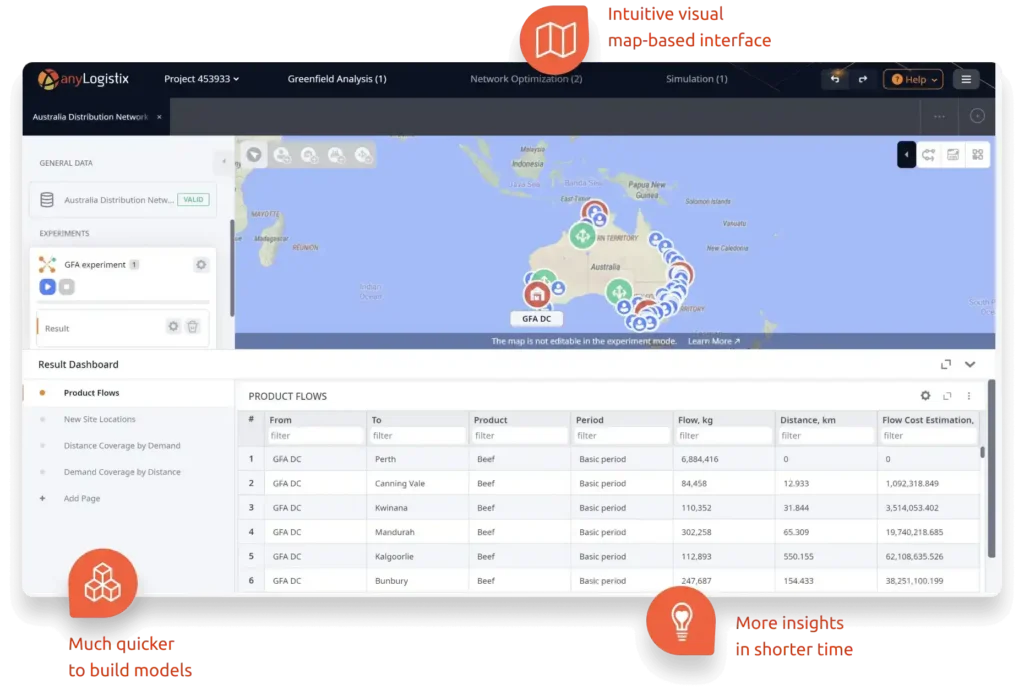
anyLogistix provides tools for designing and optimizing supply chain networks, helping users evaluate the configuration of facilities, flows, transportation and production.
Greenfield Analysis helps companies to identify the number and location of facilities based on available demand data. While Network Optimization evaluates alternative configurations according to costs, capacities, transportation and other defined constraints.
The software also supports Supply Chain Master Planning, helping determine where and how much to produce, store and ship across different periods.
Dynamic Supply Chain Simulation: From Data to Decisions
Optimization alone cannot always capture the complexity and variability of a real supply chain. anyLogistix combines optimization with dynamic simulation, allowing companies to analyze how their supply chain behaves over time and under changing conditions.
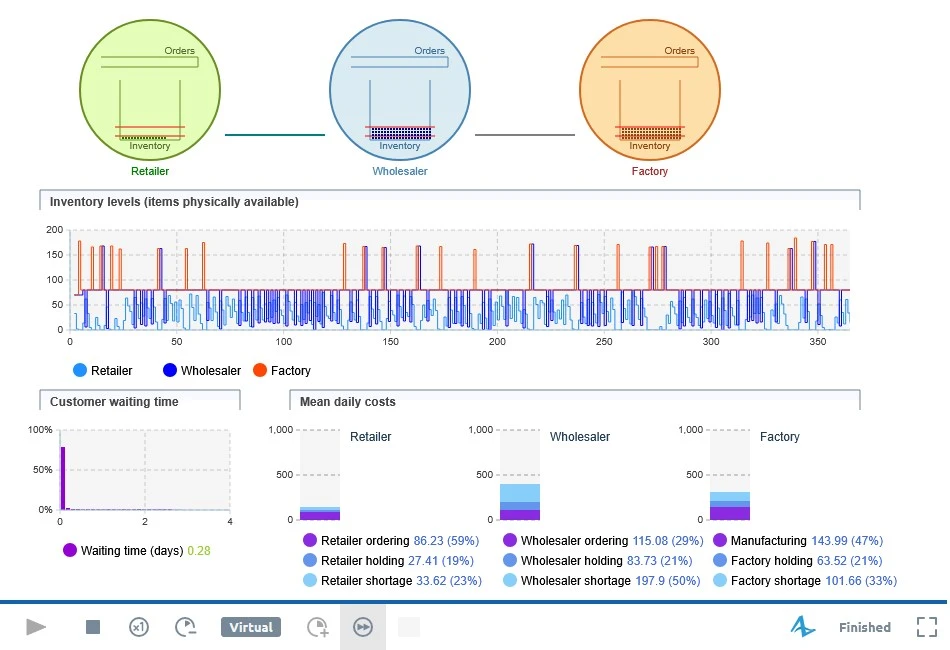
Simulation can be used to investigate inventory policies, safety stock levels, bottlenecks, service levels, transportation policies and other operational decisions. Companies can test different scenarios without affecting the real supply chain, helping companies understand the potential impact of alternative strategies before implementing them.
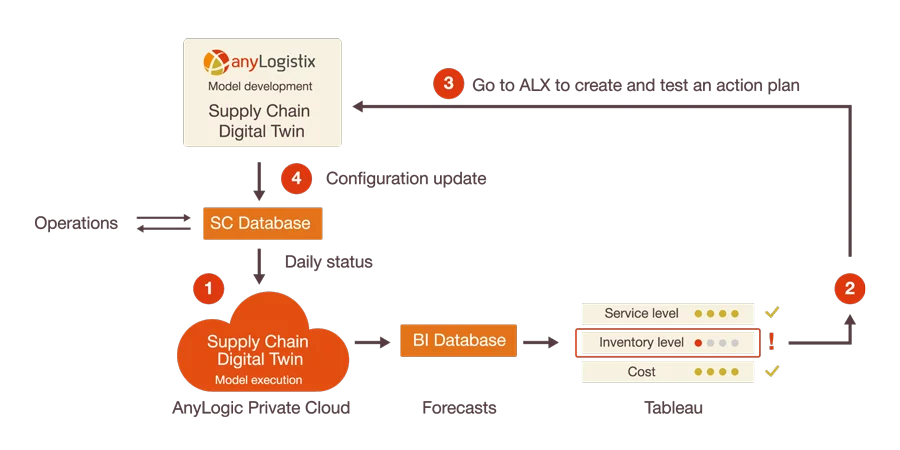
A Supply Chain Digital Twin connects operational data, simulation and performance monitoring to evaluate scenarios and support supply chain decisions.
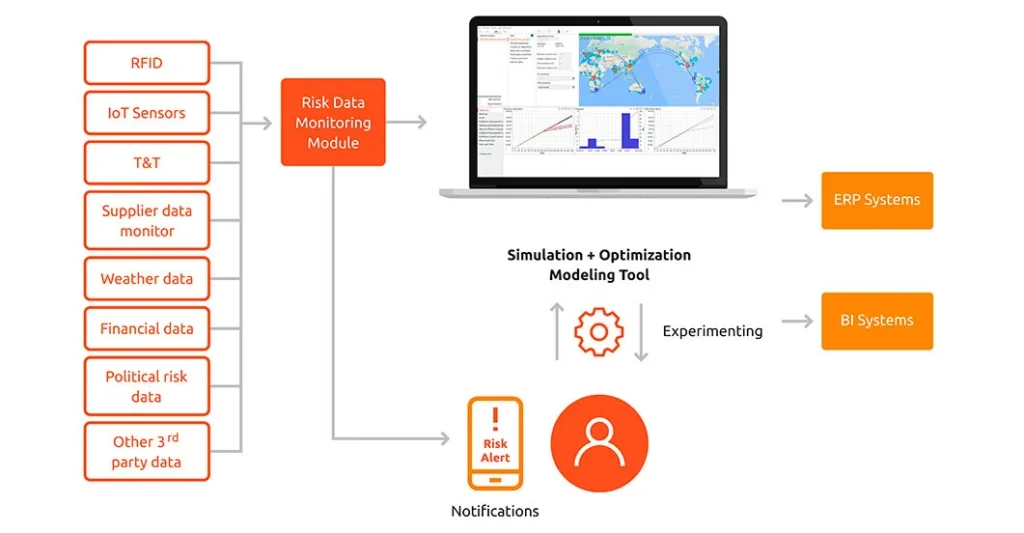
The same approach can support a decision-oriented Supply Chain Digital Twin, where operational data, simulation and performance monitoring work together. Data represents the current state of the supply chain. Simulation provides a virtual environment to test potential changes and action plans.
Performance indicators such as inventory, service level and cost can then be monitored to identify issues and evaluate possible responses. This creates a continuous cycle between the real supply chain and its digital representation: data provides visibility, simulation enables experimentation, and results support better-informed decisions.
anyLogistix Feaures
anyLogistix combines analytical optimization and dynamic simulation to provide a comprehensive approach to supply chain design and analysis. This approach enables deeper insights into complex supply chain problems.
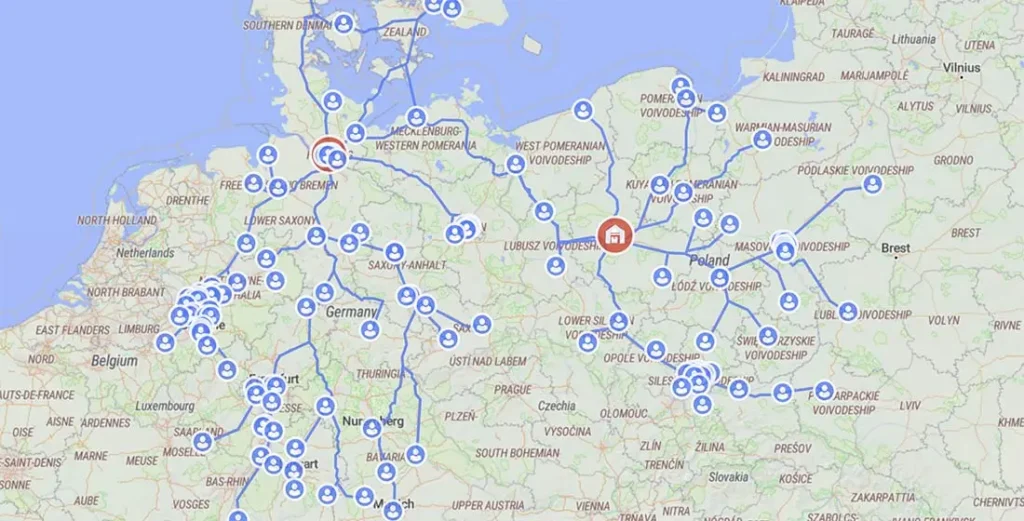
Network Design & Optimization
anyLogistix supports supply chain network design and optimization, including Greenfield Analysis, multi-echelon network analysis and Supply Chain Master Planning. Optimized configurations can be converted into dynamic simulation models for deeper analysis of supply chain dynamics.
What-if Scenario Dynamic Simulation
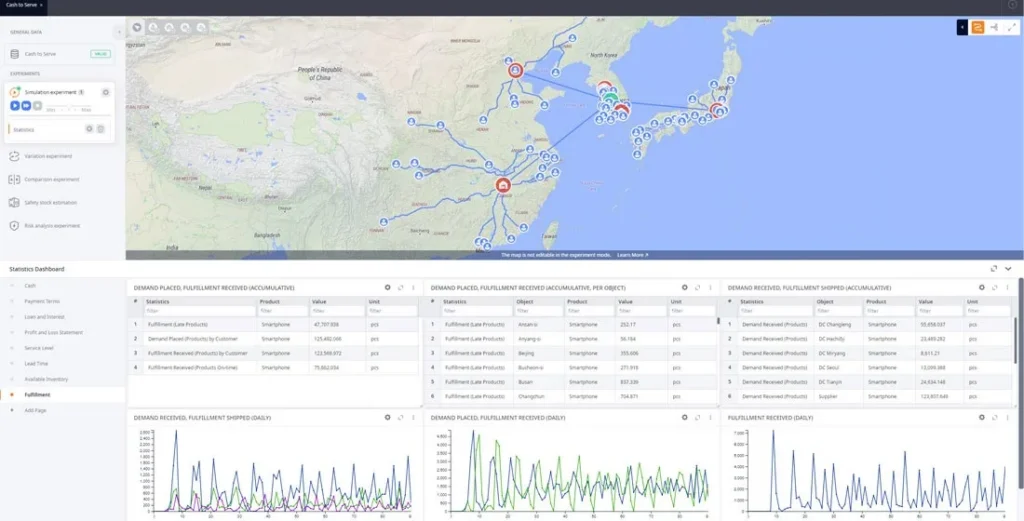
anyLogistix enables dynamic simulation for supply chain problems that that analytical optimization alone cannot solve. It accounts for time-dependent factors, random events and interactions between supply chain elements. Users can analyze changing metrics and test complex replenishment, sourcing, manufacturing and transportation scenarios.
Supply Chain Risk Mitigation
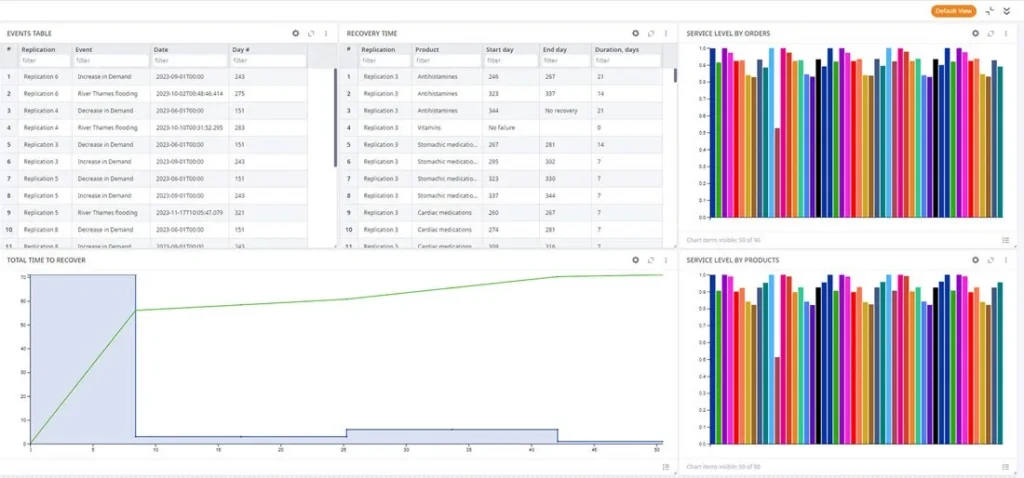
anyLogistix allows companies to simulate disruptive events and stress-test their supply chain through what-if scenarios. Users can incorporate randomness and vary model parameters to assess how instability may affect operations. They can then evaluate the supply chain’s response to potential disruptions.
Inventory Optimization
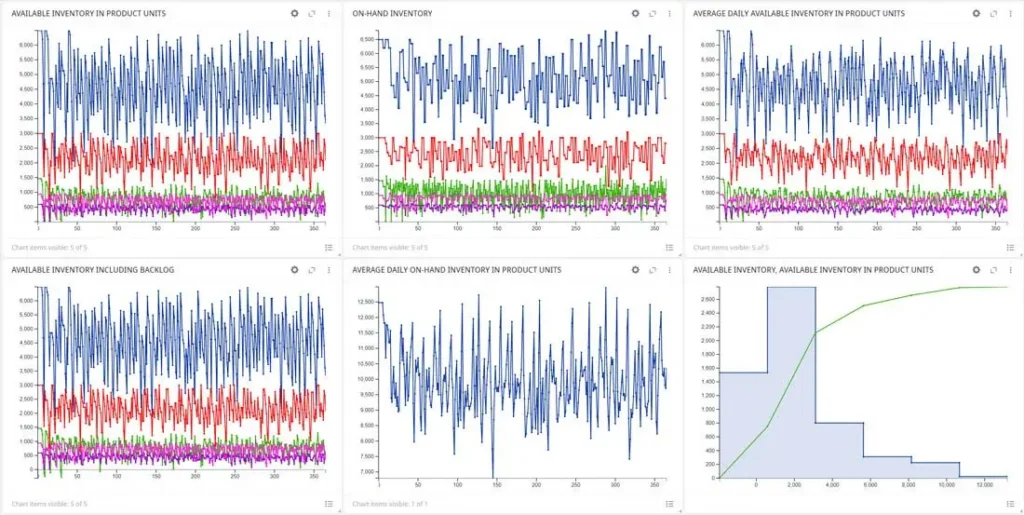
anyLogistix uses simulation for realistic inventory planning and safety stock estimation, helping balance service levels and cost-effectiveness. By accounting for real-world randomness and network dynamics, it provides deeper insight into optimal stock levels and supports supply chain resilience.
Flexible Statistics & Visualization
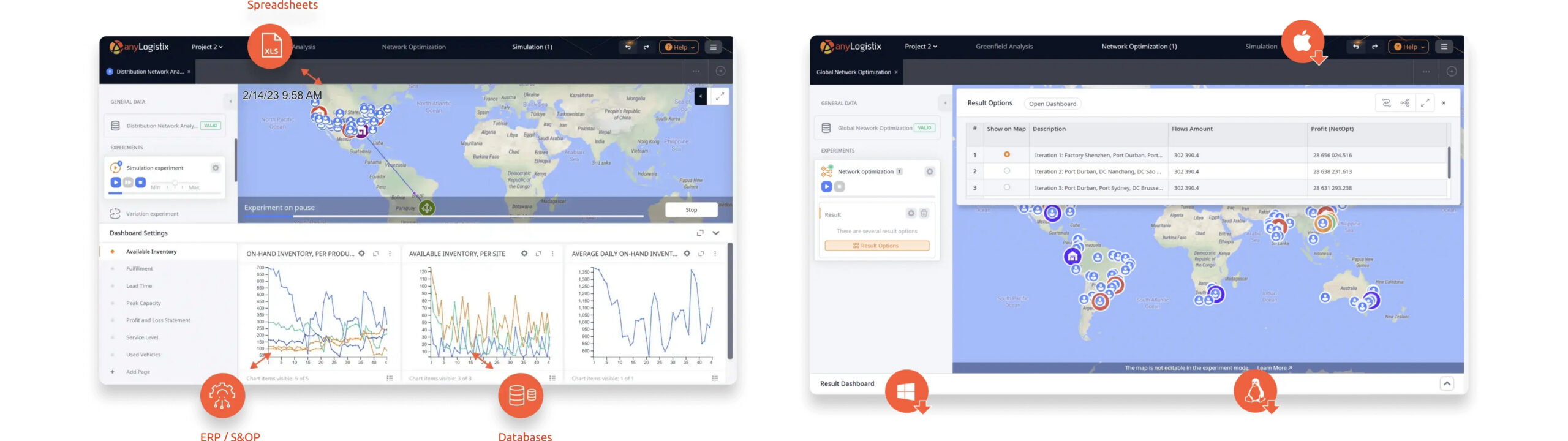
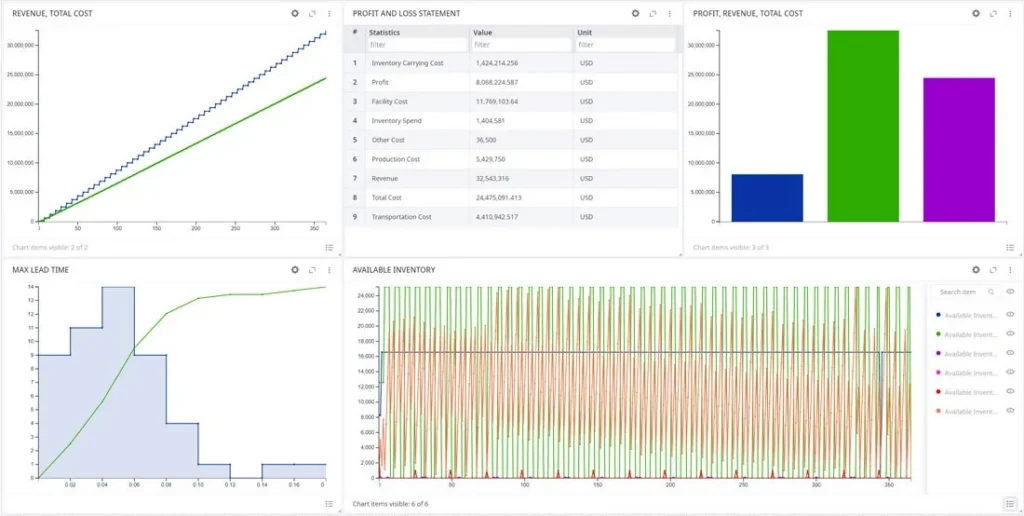
anyLogistix provides detailed supply chain statistics, including costs, revenue, inventory, service levels, capacity, utilization and orders. Users can analyze metrics over time and extend them with custom indicators. They can also visualize metrics through built-in dashboards or export them to third-party BI software.
Supply Chain Digital Twin
anyLogistix integrates with existing ERP, MRP and WMS systems to create a Supply Chain Digital Twin based on real-time data. Automated data collection, notifications and triggers help monitor supply chain performance. Simulation, optimization and risk analysis support the development and testing of action plans.
Transportation Optimization
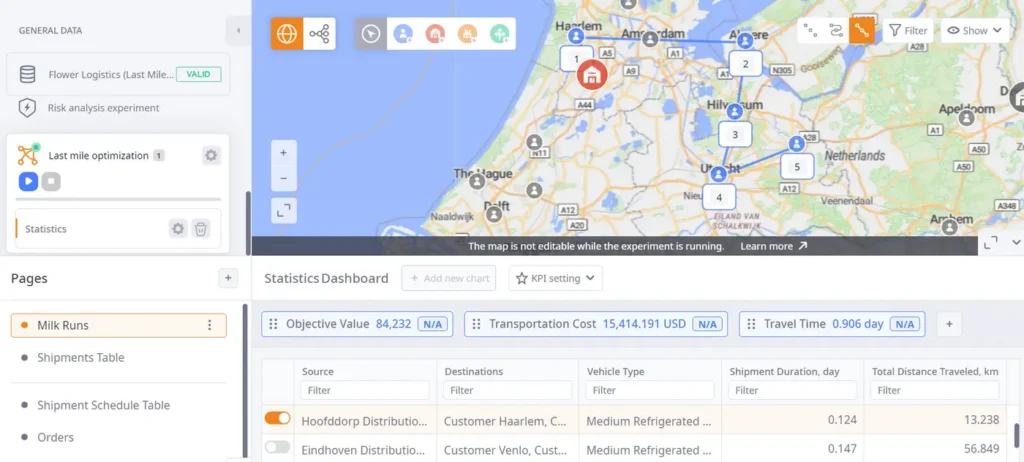
anyLogistix supports last-mile optimization, helping companies plan delivery routes and shipment schedules while considering fleet availability and facility operating hours. GIS visualization and KPI analysis allow users to compare cost, service level, delivery resources and CO₂ emissions across alternative configurations.
Optimizing the Supply Chain Network through Simulation
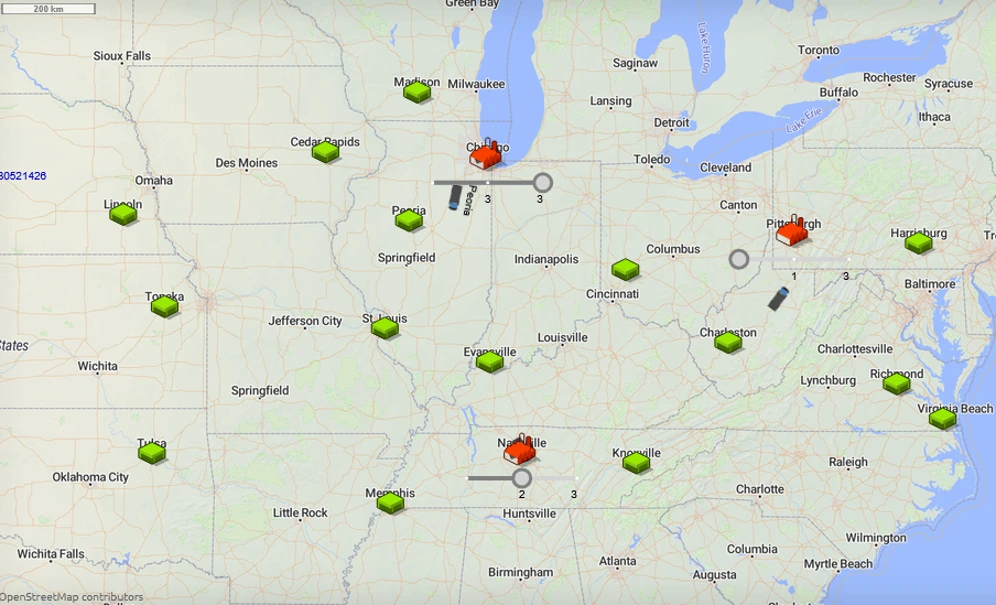
Designing a global supply chain requires the simultaneous evaluation of production, distribution, transportation, facility capacity, service levels, and operating costs. Supply chain simulation makes it possible to turn these variables into an analyzable scenario, comparing different network configurations before making operational and strategic decisions.
In this example, anyLogistix is used to analyze a multi-tier network consisting of suppliers, manufacturing facilities, ports, distribution centers, and customers located across international markets. The model takes into account demand, products, bills of materials, production capacities, transportation costs, and sourcing constraints, identifying the most suitable network configuration based on the defined objectives.
The value of simulation, however, goes beyond identifying the “best solution”. It helps companies quantify the impact of decisions and compare alternative scenarios. Users can also understand how changes in the network structure affect costs and performance. This data-driven approach provides a solid foundation for more informed decisions in supply chain design and optimization.
Industries
Supply Chains
Manufacturing
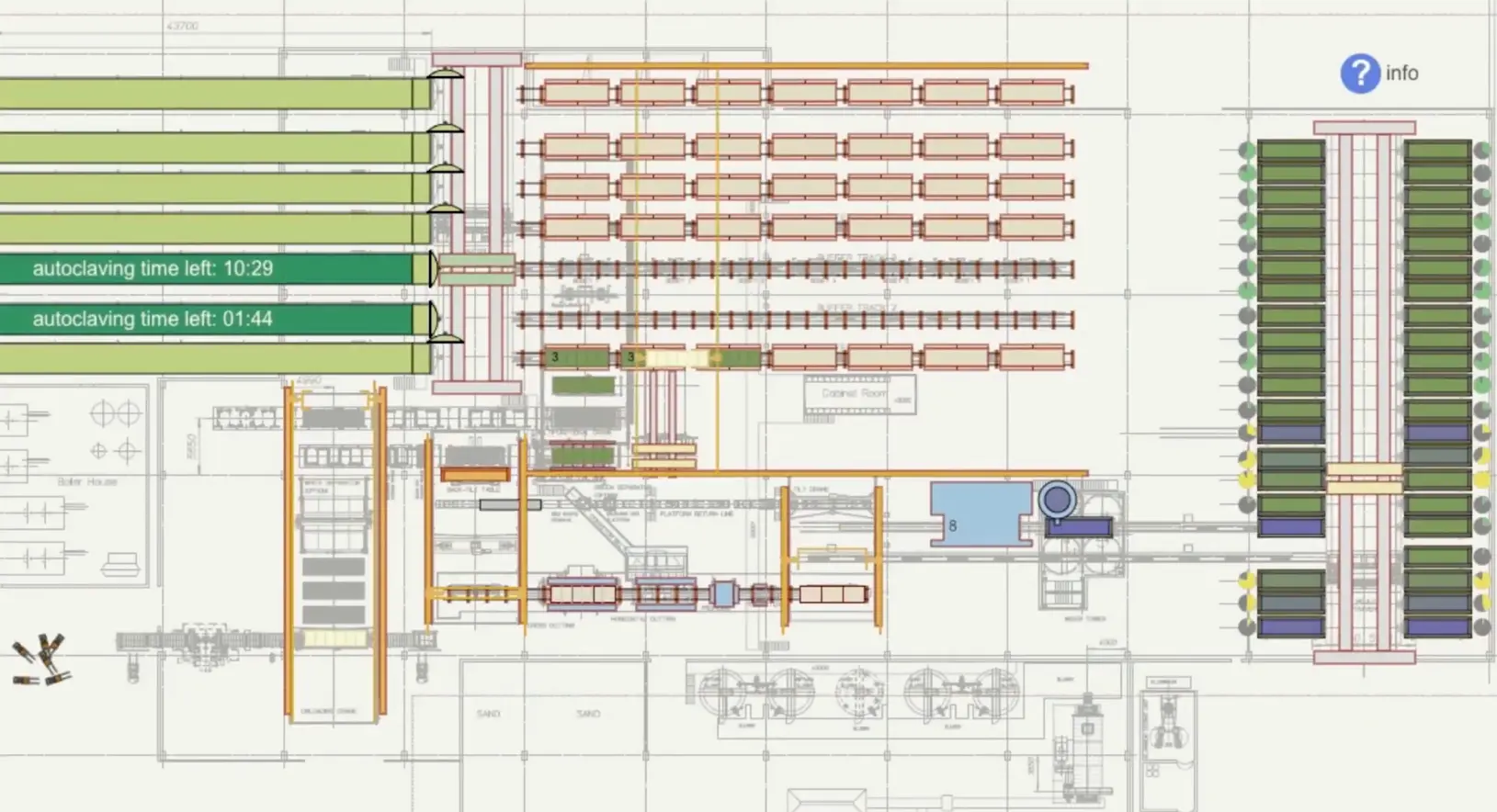
Production planning, supply chain optimization and capacity analysis.
Transportation
Transportation planning, network optimization and fleet analysis.
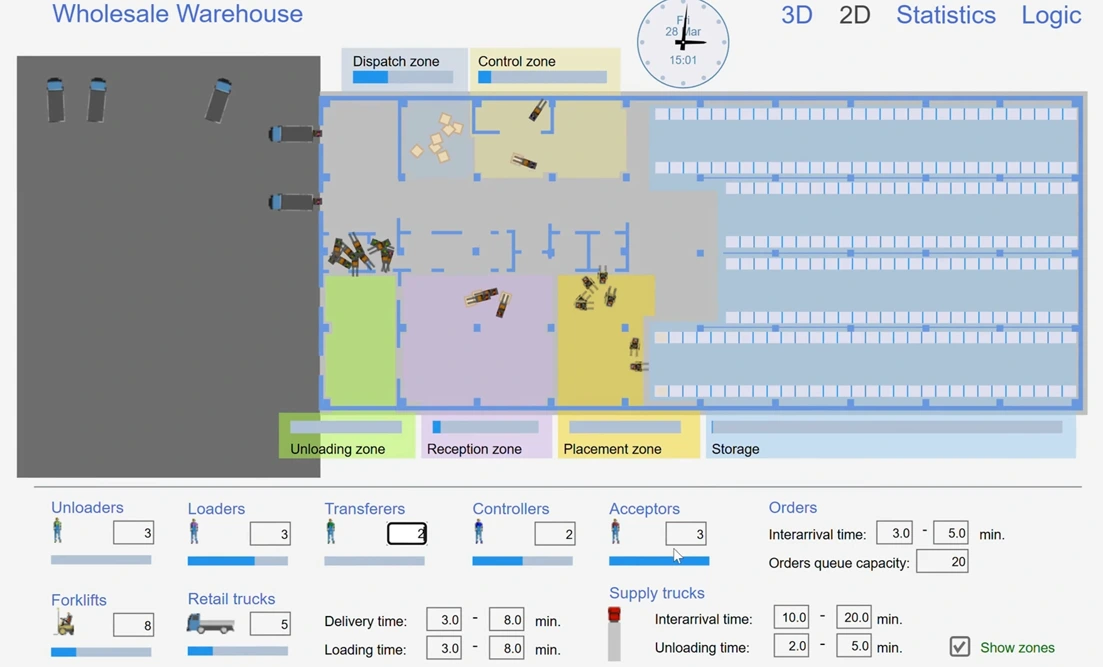
Warehouse Operations
Warehouse network design, inventory optimization and distribution planning.
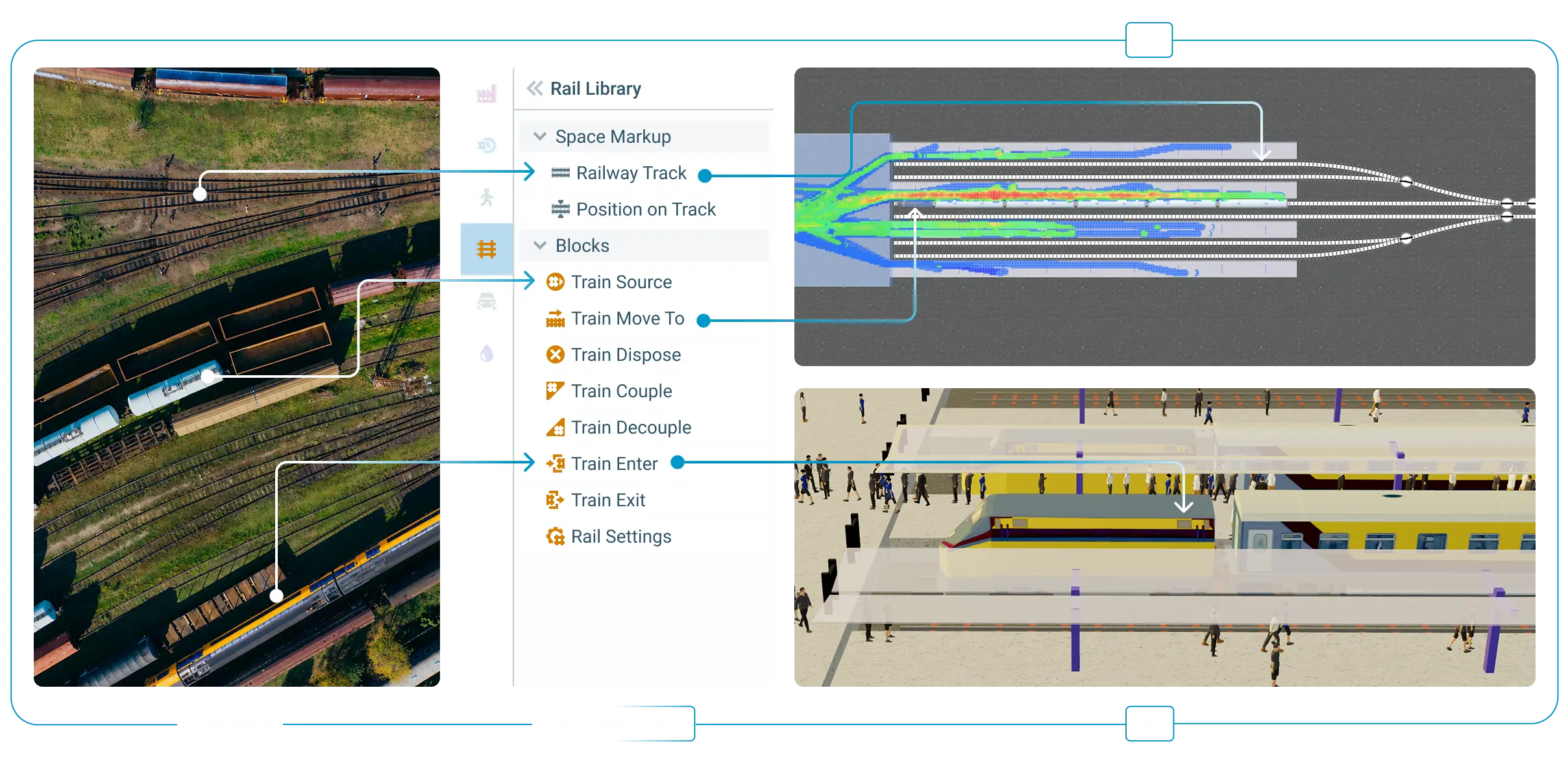
Rail Logistics
Rail network planning, transportation optimization and fleet analysis.
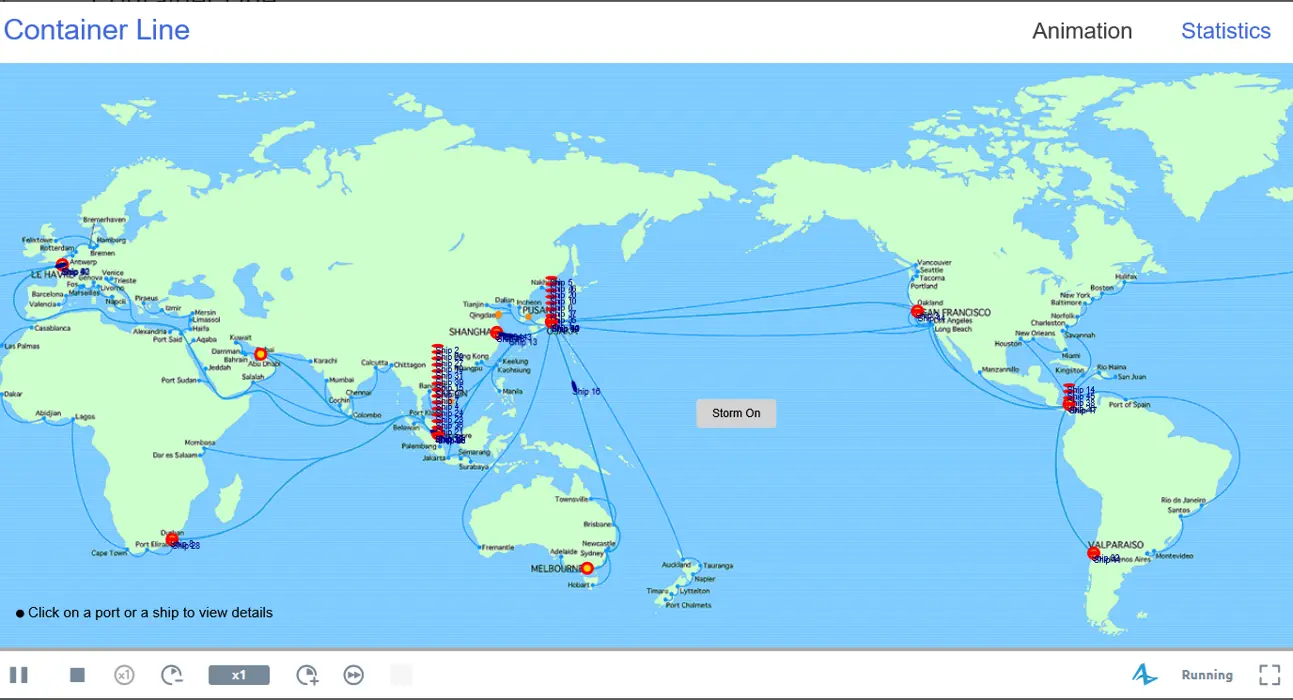
Ports & Terminals
Container operations, resource management, and risk assessment.
Related products
Explore AnyLogic’s solutions for simulation, supply chain analysis and cloud-based modeling, complementing the capabilities of anyLogistix.


AnyLogic Professional – The premier development environment for engineers and simulation modelers. Delivers multimethod modeling capabilities, domain-specific libraries, 2D/3D visualization, standalone Java application export, and native AnyLogic Cloud integration.


AnyLogic Cloud – The enterprise cloud infrastructure for executing, managing, and embedding AnyLogic simulation models at scale across distributed computing clusters
FAQ
How can anyLogistix help optimize a supply chain network?
anyLogistix enables companies to model and optimize complex supply chain networks, evaluating facilities, transportation, inventory, sourcing, costs, and service constraints to compare alternative network configurations.
Can anyLogistix be used for supply chain network design?
Yes. anyLogistix can support supply chain network design by analyzing facility locations, distribution flows, sourcing strategies, transportation options, and capacity constraints across different scenarios.
How can supply chain simulation support strategic decision-making?
Supply chain simulation allows companies to test alternative scenarios before implementation, quantify their impact on costs and performance, and evaluate trade-offs between service levels, capacity, transportation, inventory, and other strategic objectives.
Can Flexcon help implement an anyLogistix supply chain simulation project?
Yes. Flexcon combines supply chain simulation expertise with industrial consulting and process knowledge to develop models and scenarios tailored to specific business challenges, supporting companies from problem definition through analysis and decision-making.
Contact Flexcon to discuss your supply chain simulation and optimization project.