Supply chain design, risk analysis, and scenario testing.




AnyLogic and AnyLogistix for Enterprise Modeling and Simulation
AnyLogic is a leading provider of multimethod simulation software and solutions for complex business systems. Its portfolio forms an integrated ecosystem combining simulation modeling, supply chain optimization, and cloud-based simulation deployment.
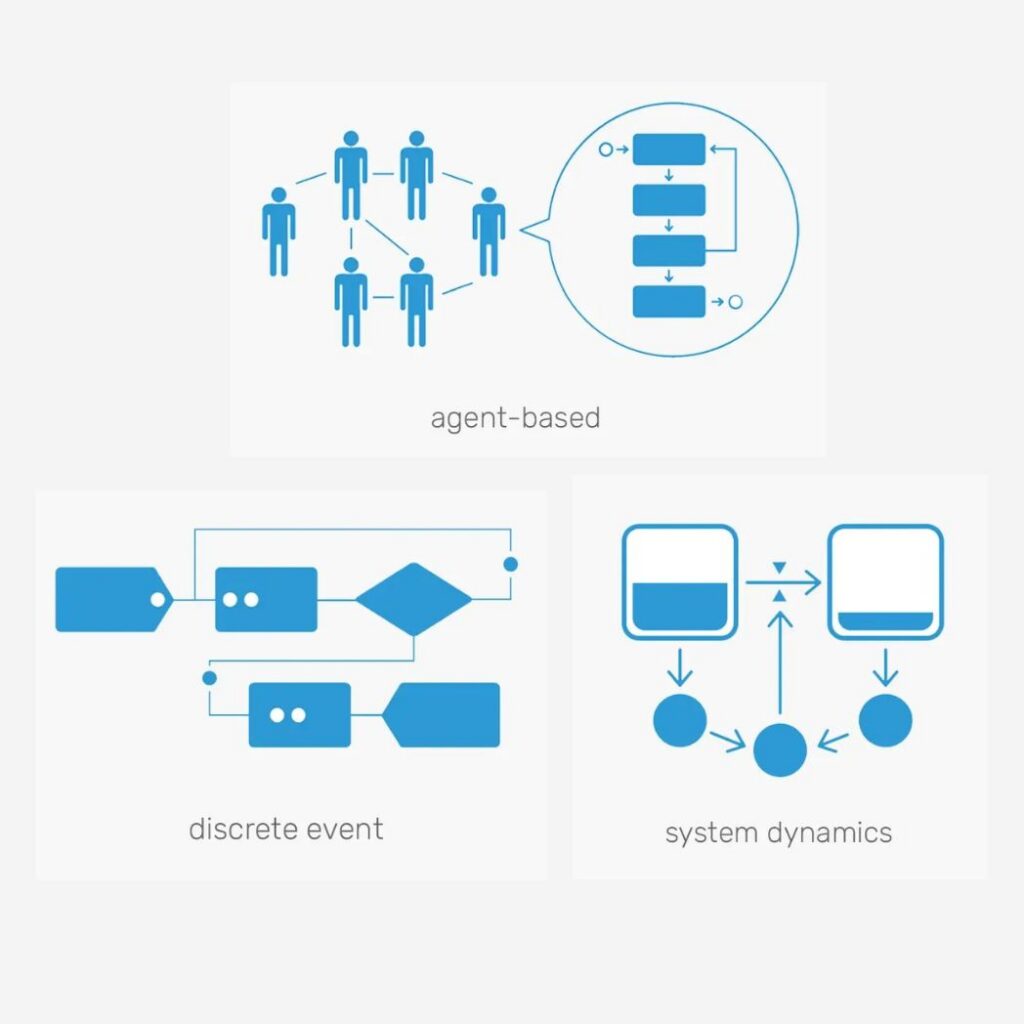
AnyLogic is the global standard in multimethod simulation software, designed to model, analyze, and optimize complex processes across manufacturing, intralogistics, transportation, and service systems.
AnyLogic natively integrates the three primary modeling methodologies: Discrete Event (DES), Agent-Based (ABM), and System Dynamics (SD). Organizations can use them within a single environment to evaluate alternative scenarios and reduce decision risk. They can also maximize asset utilization, remove bottlenecks, and boost throughput before making real-world capital investments.
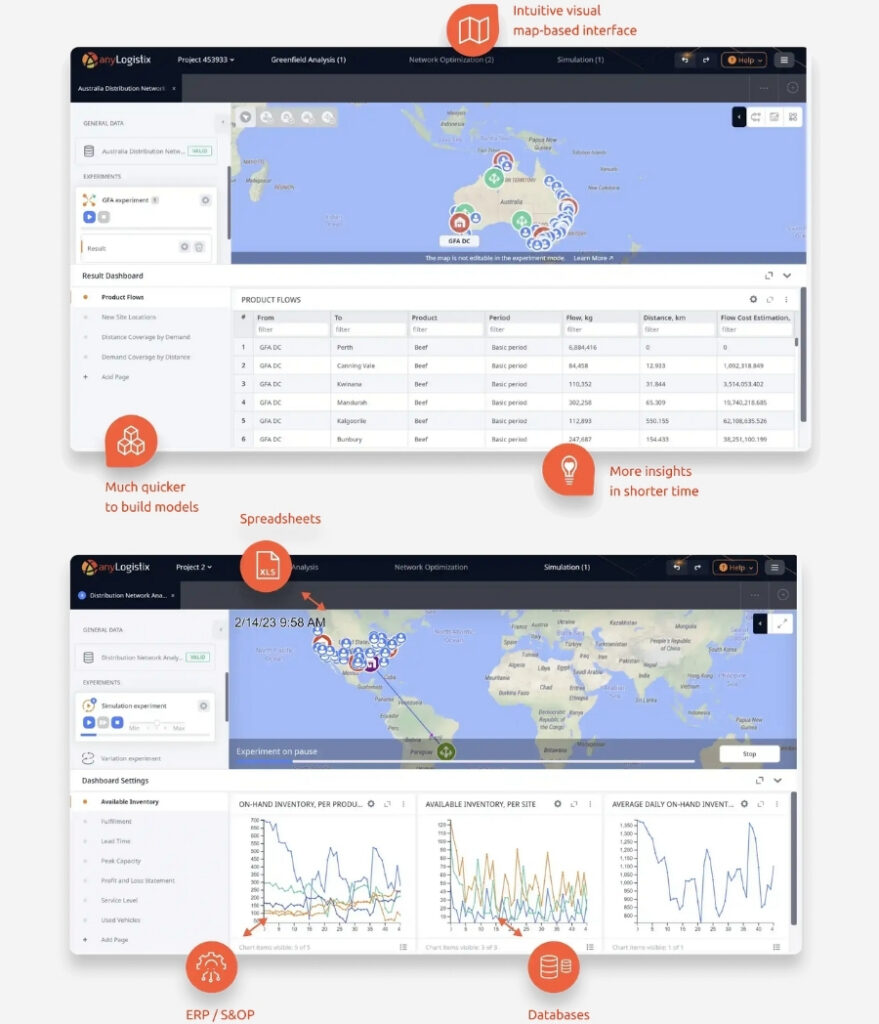
Alongside AnyLogic, anyLogistix (ALX) extends simulation capabilities across the entire end-to-end value chain. By combining mathematical optimization solvers (powered by the Gurobi Engine) with dynamic simulation, anyLogistix allows companies to design, optimize, and stress-test global logistics networks and supply chains to ensure operational resilience and complete end-to-end visibility.
AnyLogic and anyLogistix provide a risk-free virtual environment for testing complex “what-if” scenarios. Organizations can use simulation to size AGV/AMR fleets, validate high-density automated warehouses, plan regional distribution center footprints, and evaluate supply chain robustness against global disruptions. The models capture real-world stochastic variability and support data-driven strategic decisions.
Integrated Multimethod Modeling
AnyLogic removes the constraints of traditional discrete-event-only tools by allowing modelers to combine three distinct paradigms inside a single model architecture.
Each approach addresses a different level of abstraction, allowing a system to be represented with the level of detail most appropriate to the modeling objective.
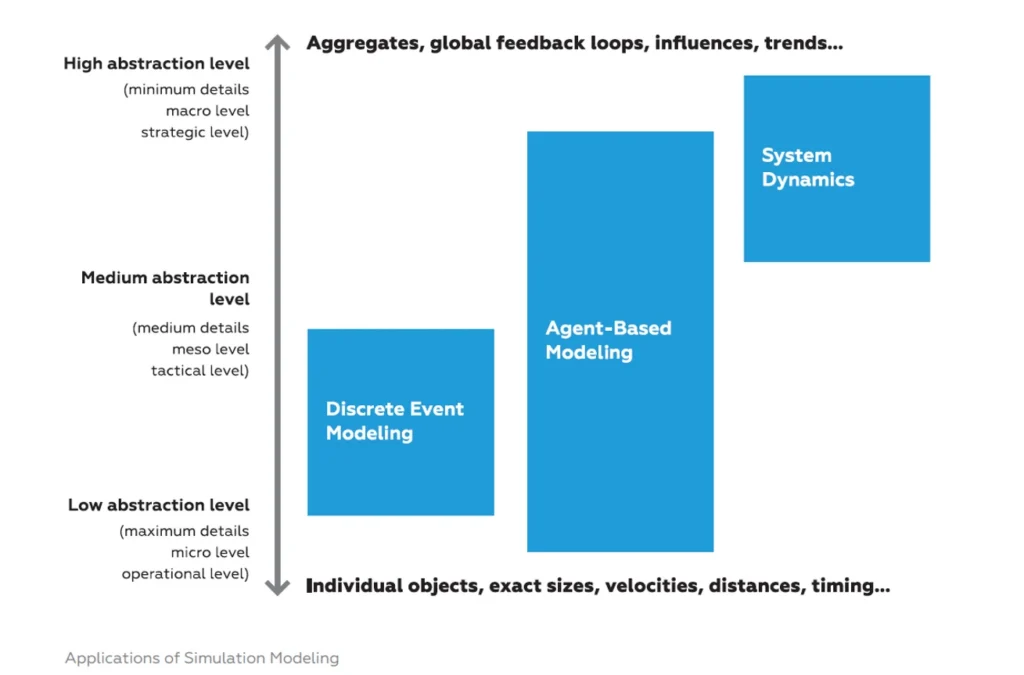
Together, these approaches cover different perspectives of a system. They range from detailed operational processes to individual entities and their interactions. They also capture higher-level system behavior.
- Discrete Event Simulation (DES): Detailed analysis of sequential processes, assembly lines, warehouse operations, and transactional workflows.
It models a system as a sequence of operations performed across entities. This makes it possible to represent complex processes through intuitive process flows. This approach helps analyze system behavior, identify bottlenecks, and evaluate different scenarios to improve operational efficiency. - Agent-Based Modeling (ABM): Capturing individual autonomous behaviors, competitive dynamics, decentralized decision-making, and market interactions.
It uses a bottom-up approach in which systems are represented as interacting agents, each with their own behaviors and decision-making rules. The overall behavior of the system emerges from the individual actions and interactions of these agents. This makes Agent-Based Modeling (ABM) suitable for complex systems such as markets, supply chains, logistics, traffic, and social processes. - System Dynamics (SD): High-level strategic modeling, continuous flows, macroeconomic dependencies, and feedback loops.
It operates at a high level of abstraction. Stocks and flows represent how quantities evolve over time within the system. System Dynamics (SD) is particularly suited to strategic management, marketing, macroeconomic, ecological, and social systems. In these contexts, feedback relationships and interdependencies play a central role.
Domain-Specific Libraries
AnyLogic includes 6+ ready-to-use industry-specific libraries designed for specialized operational environments.
Process Modeling Library: Model and optimize business processes and operational workflows, from service operations and logistics chains to complex resource-constrained processes. It also serves as the foundation for the other domain-specific libraries.
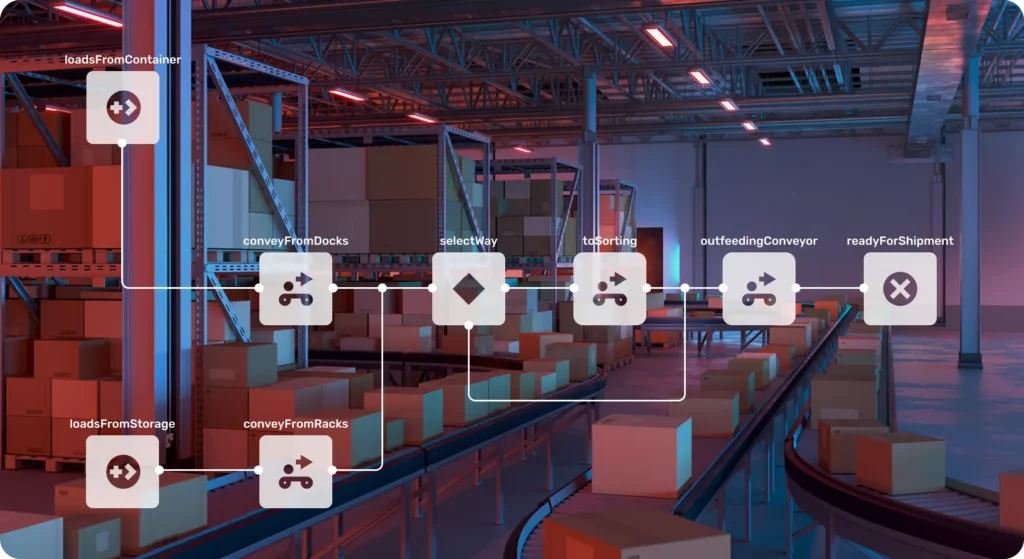
Material Handling Library: Model and control modular conveyor networks, custom AGV/AMR fleets with automatic routing and collision avoidance, overhead cranes, processing stations, and automated storage systems (ASRS).
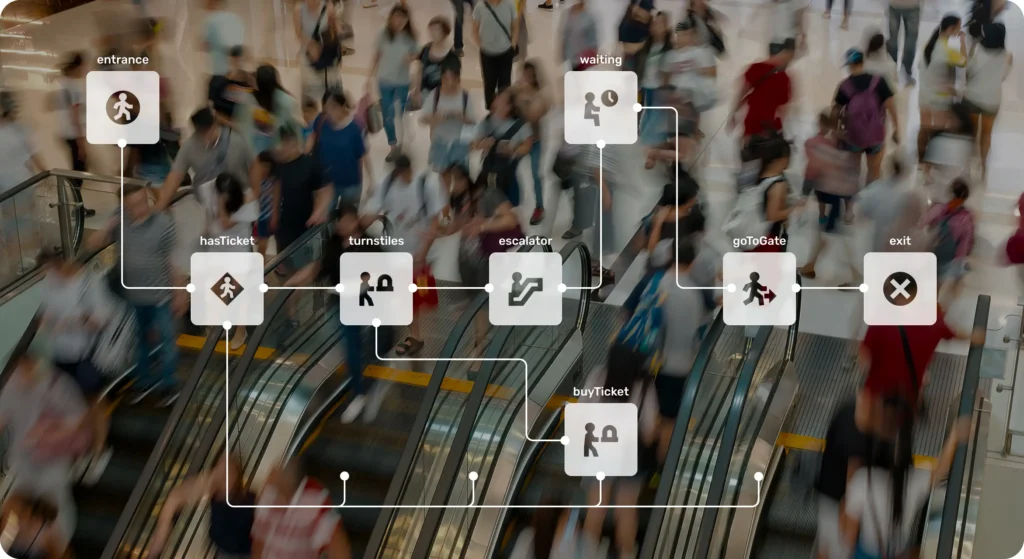
Pedestrian & Crowd Library: Realistic simulation of high-density pedestrian dynamics in airports, train stations, and public venues, featuring density heatmaps and evacuation path calculations.
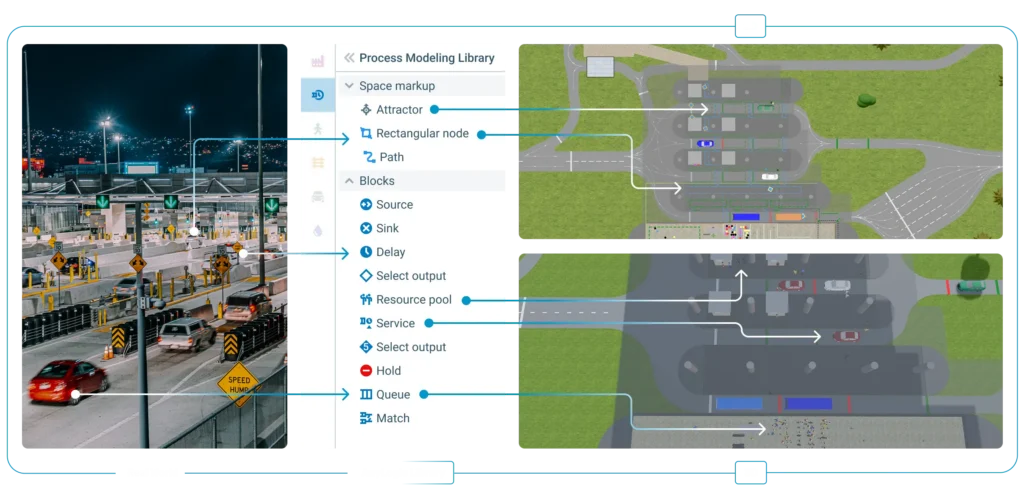
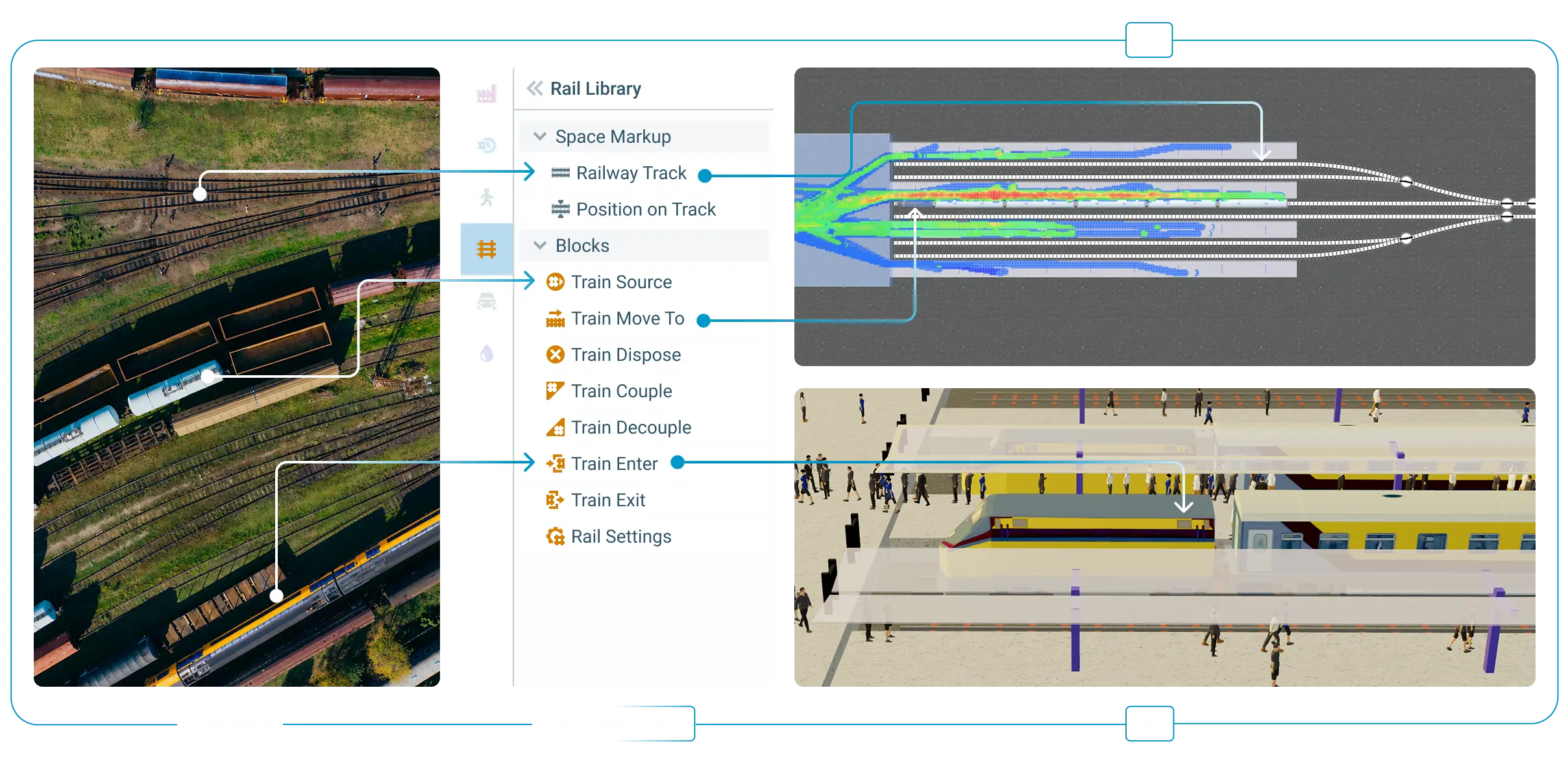
Rail & Road Traffic Libraries: Microscopic simulation of railway networks, yard switching operations, urban street traffic, intersection signaling, and vehicle interaction physics.
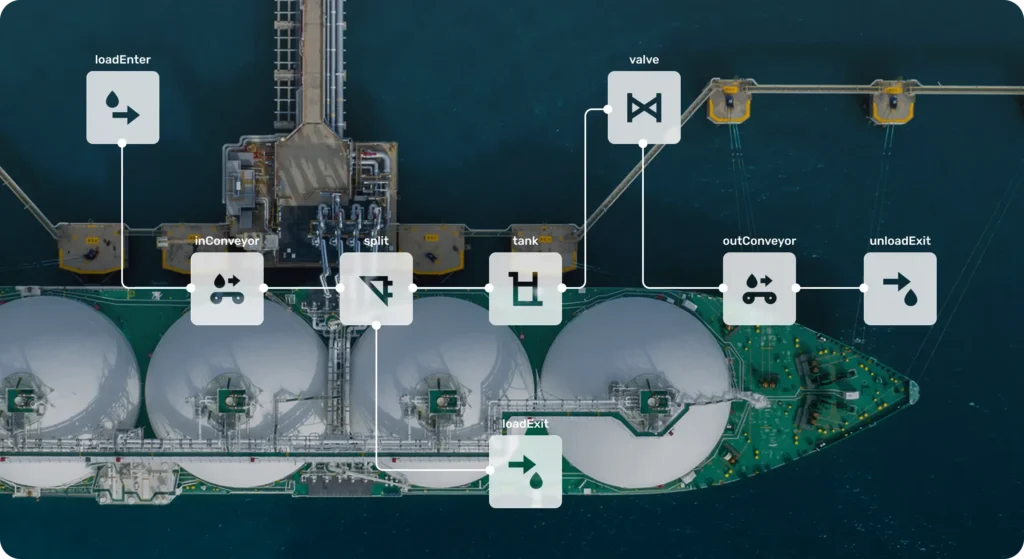
Fluid Library: Track and control continuous fluid, pipeline, and bulk material flows for mining, oil & gas, chemicals, and food production.
Native 2D/3D Visualization & GIS Mapping
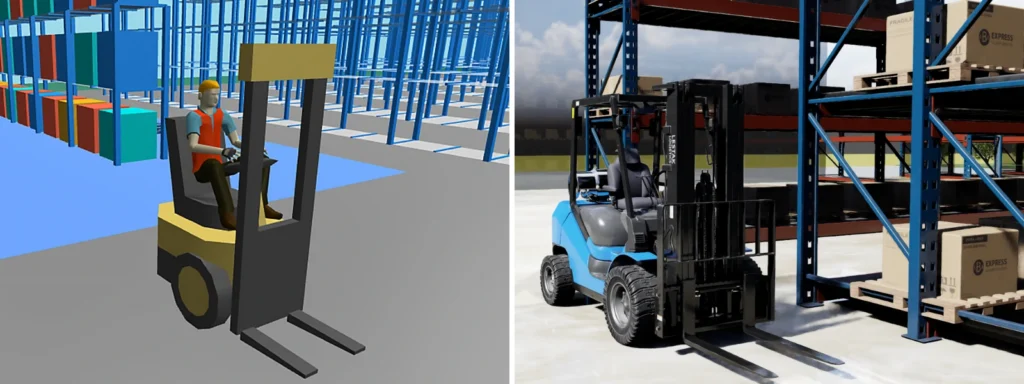
AnyLogic models incorporate interactive 2D and 3D visualizations. They also provide native GIS integration and support for CAD drawings and custom 3D models.
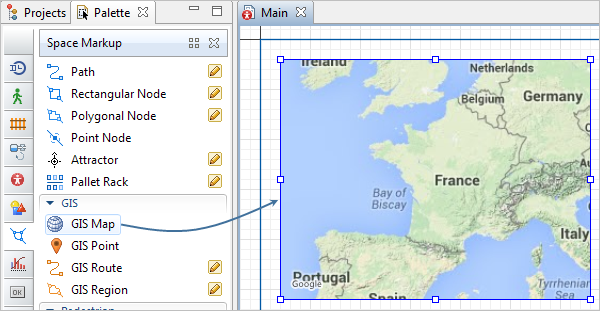
Native GIS Integration: Search, place, and route assets on global OpenStreetMap data with automatic route calculations across road, rail, and maritime networks.
3D Visual Animation: Real-time lighting, shadows, skyboxes, and native import support for industry-standard 3D formats (glTF, OBJ, FBX, CAD).
Open Architecture & Advanced Customization
AnyLogic combines visual modeling with a fully extensible programming environment. This gives organizations the flexibility to customize models, integrate external technologies, and connect simulation with existing enterprise systems.
- 100% Java-Based Engine: Full freedom to write custom logic, create proprietary object libraries, and integrate external Java libraries.
- AI & Python Connectivity: Seamless communication with Python-based machine learning and Reinforcement Learning (RL) frameworks to train autonomous agents inside digital twin environments.
- Enterprise Data Connectivity: Out-of-the-box connectors for Microsoft Excel, text/CSV files, enterprise relational databases (MS SQL, Oracle, PostgreSQL, MySQL), and standard REST APIs.
From custom model logic to enterprise data and AI integration, AnyLogic can be adapted to fit existing technologies, workflows, and digital infrastructure.
Optimization & Scenario Analysis
AnyLogic provides a rich experiment framework to evaluate alternative configurations and test parameter changes. It also enables users to analyze system behavior and identify optimized solutions under defined constraints.
- Scenario Analysis: Compare alternative system configurations and operating conditions using Parameter Variation, Sensitivity Analysis, and Monte Carlo experiments.
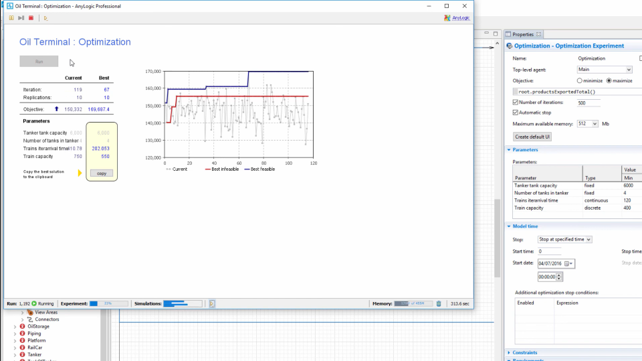
- Optimization: Automatically search for parameter values that improve system performance while considering defined objectives, constraints, and requirements.
- Dynamic Simulation & Stress-Testing: Evaluate how variability, uncertainty, and changing operating conditions affect system performance across multiple simulation runs.
- Performance Analysis: Compare key performance indicators across scenarios to support data-driven decisions and identify the most effective configuration.
AnyLogic Experimenter & OptQuest Integration
Run multiple simulation experiments to evaluate uncertainty, compare scenarios, and analyze parameter sensitivity. Use OptQuest or AnyLogic’s built-in genetic optimization engine to identify better-performing solutions through simulation-based optimization.
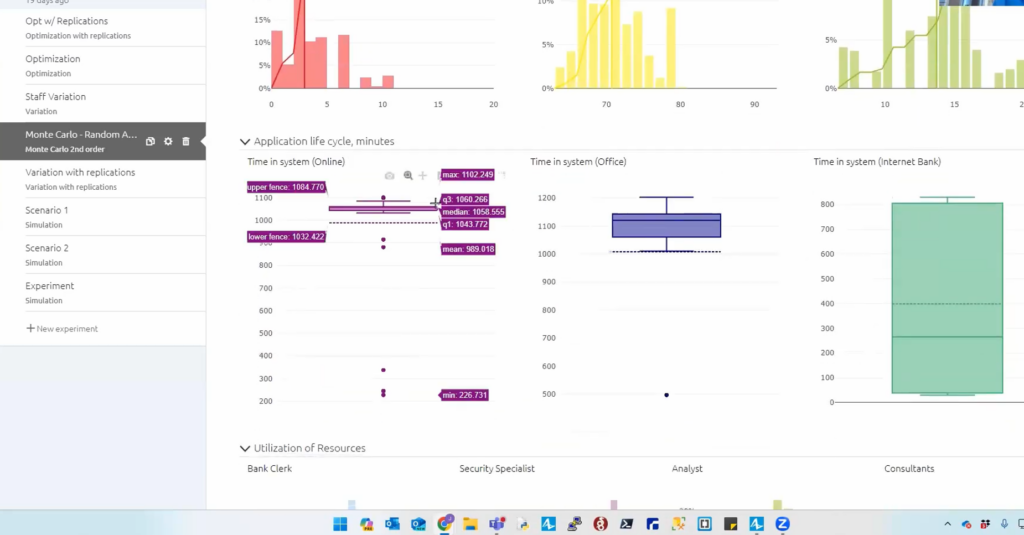
- Parametric & Monte Carlo Experiments: Distribute hundreds of simulation replications across multi-core CPUs in parallel to perform sensitivity analyses and quantify operational risk.
- OptQuest Optimization Engine: Built-in multi-criteria optimization to automatically find optimal parameter values subject to defined constraints and complex business goals.
anyLogistix: Network Design, Greenfield Analysis, and Risk Assessment
anyLogistix applies simulation and Mixed-Integer Linear Programming (MILP) for strategic, tactical, and operational supply chain design.

- Greenfield Analysis (GFA): Determine optimal center-of-gravity locations and identify the ideal count of distribution hubs based on customer demand clusters.
- Network Optimization & Master Planning: Solve sourcing and product allocation problems, calculate trade-offs between transport costs, facility operating costs, and import tariffs.
- Dynamic Simulation & Stress-Testing: Evaluate real-time uncertainty, demand fluctuations, bullwhip effects, and calculate recovery times (Time-to-Survive / Time-to-Recover) under disruptive events.
- Inventory Policy Fine-Tuning: Define, test, and optimize min/max replenishment rules, periodic review policies, and safety stock levels.
Industry 4.0 & Digital Transformation
AnyLogic supports Industry 4.0 and digital transformation by turning simulation into a dynamic decision-support tool for complex industrial systems. By combining simulation with real-world operational data, organizations can model production and logistics processes and test alternative scenarios. This approach helps them anticipate the impact of changes and optimize operations before implementing decisions in the real system.
Digital Twins & System Integration
Organizations can connect AnyLogic simulation models to operational data and enterprise systems through databases, APIs, and platforms such as MES, ERP, WMS, and SCADA. This enables organizations to develop digital twins that reflect the behavior of real-world processes. These digital twins use current operational data to evaluate scenarios, forecast system performance, and support planning and optimization decisions.
By integrating simulation with the broader enterprise technology landscape, digital twins can become continuously updated decision-support tools rather than isolated analytical models.
AnyLogic Cloud
AnyLogic Cloud is a secure, web-based platform that brings simulation models from development into operational use. Users can run AnyLogic models online and access them directly through a web browser. This makes simulation available to decision-makers, analysts, and other stakeholders without requiring a local AnyLogic installation.
The platform supports cloud-based experimentation and collaboration. Users can run models, explore different scenarios, manage experiments, and share simulation results online. This makes it possible to use simulation not only during model development, but also as an operational decision-support tool across the organization.
For computationally demanding applications, AnyLogic Cloud provides scalable computing resources and High-Performance Computing (HPC) capabilities. Large experiment batches, parameter variation and optimization studies can be executed in the cloud, enabling organizations to evaluate a large number of scenarios efficiently.
AnyLogic Cloud can also be integrated with existing enterprise environments. Through REST APIs and the JavaScript client library, models and simulation dashboards can be embedded into corporate web portals, applications, and decision-support systems. This integration connects simulation directly with business workflows.
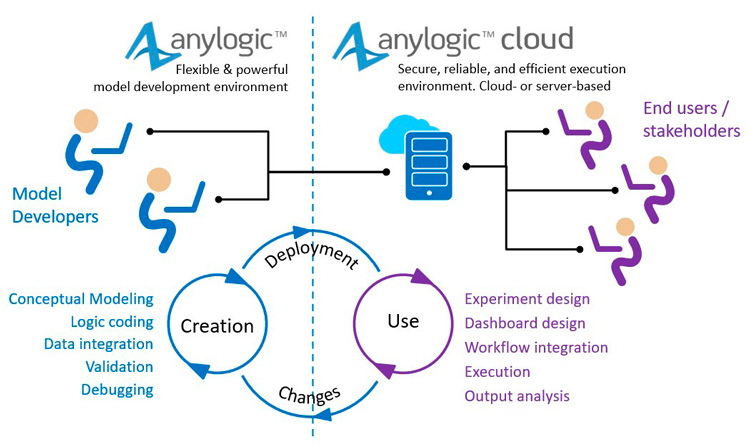
- Run and share models online – Access simulations, experiments, and results directly from a web browser.
- Scale complex experiments – Use cloud computing and HPC resources for large experiment batches, parameter variation, and computationally intensive studies.
- Integrate simulation into enterprise workflows – Connect models and dashboards with web applications and corporate systems through REST APIs and the JavaScript client library.
Big Data & Advanced Analytics
AnyLogic generates rich performance datasets during runtime and exports operational metrics directly to leading Business Intelligence platforms such as Power BI and Tableau. It also provides real-time monitoring of utilization histograms, queue densities, and throughput rates. The software also uses real-world data from CRM, ERP, HR, and other databases to define realistic, personalized agent properties and behaviors. This enables accurate modeling, forecasting, and comparison of alternative scenarios.
Industries
Supply Chains
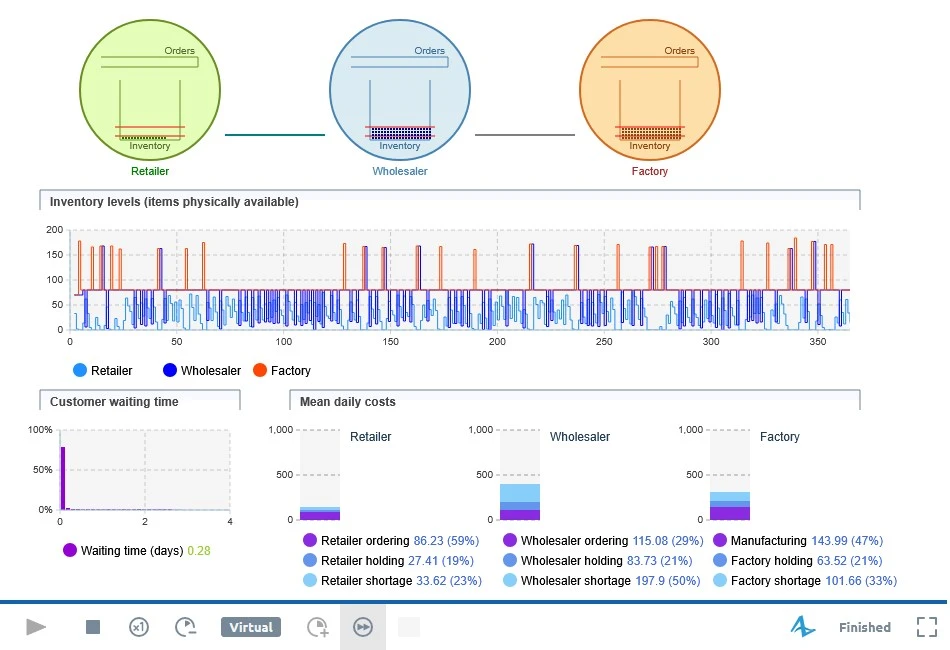
Manufacturing
Production planning, process improvement, and layout optimization.
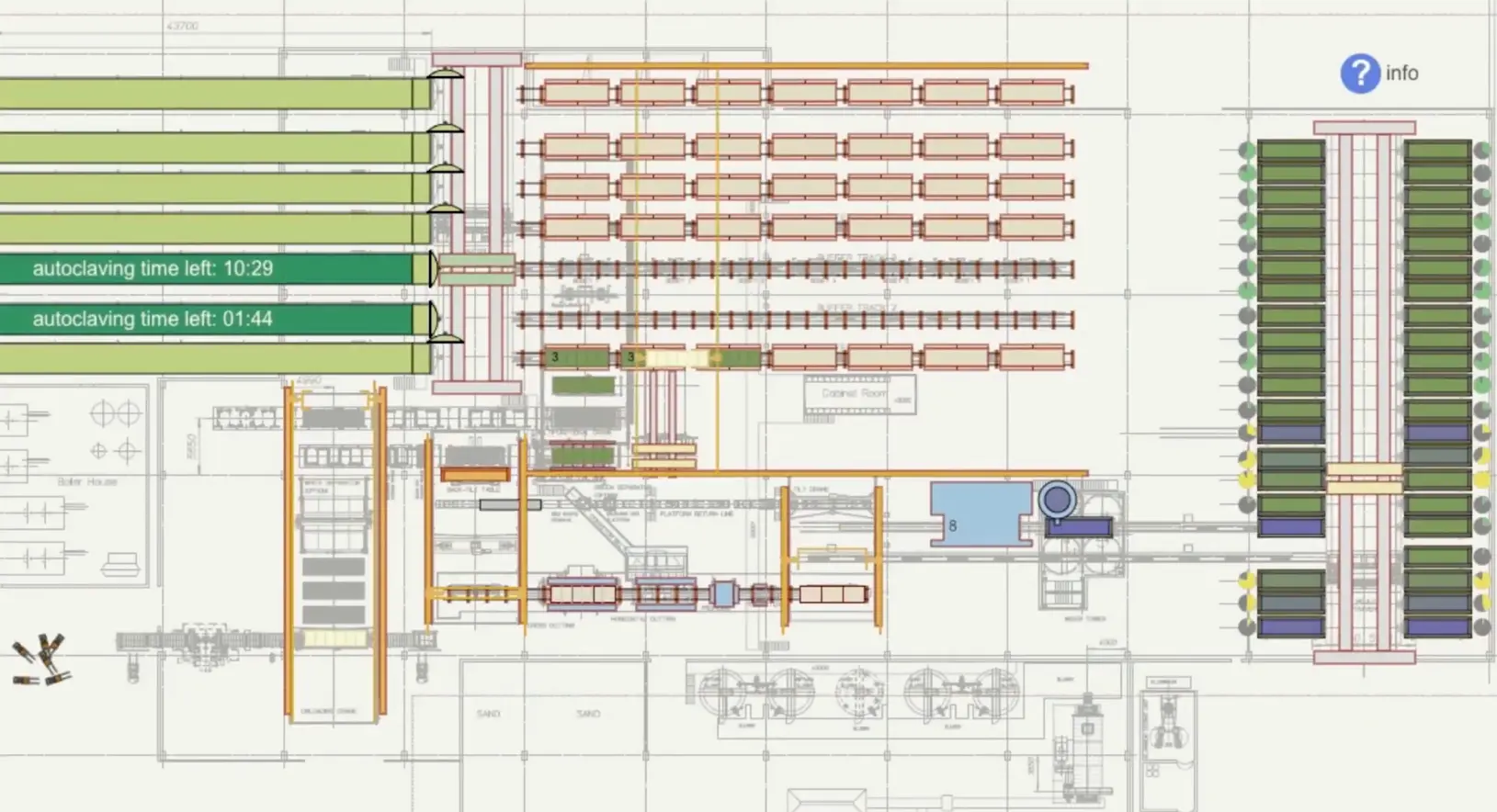
Transportation
Logistics planning, fleet management, and risk analysis.
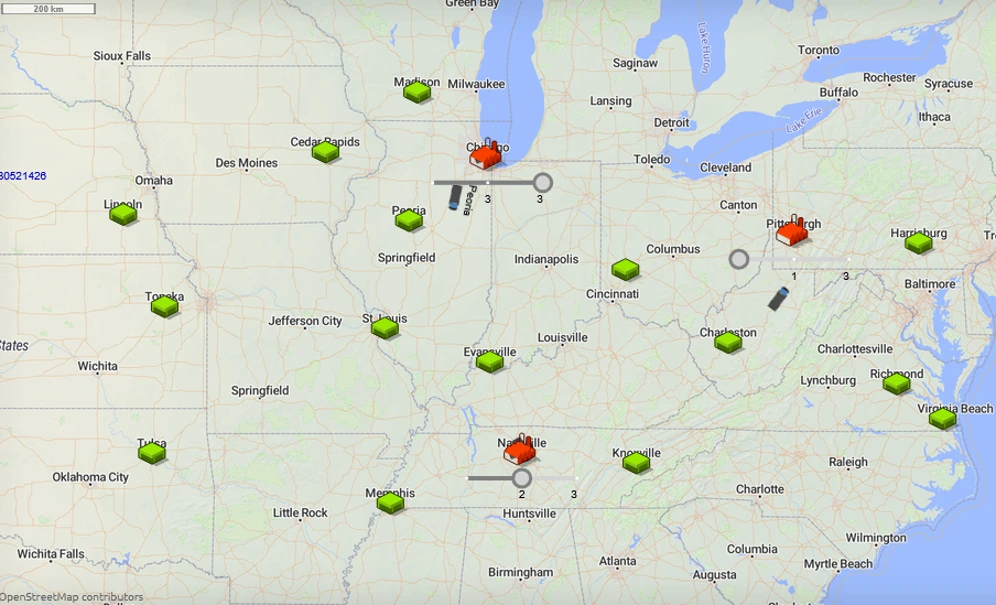
Warehouse Operations
Warehouse layout, picking optimization, and staffing.
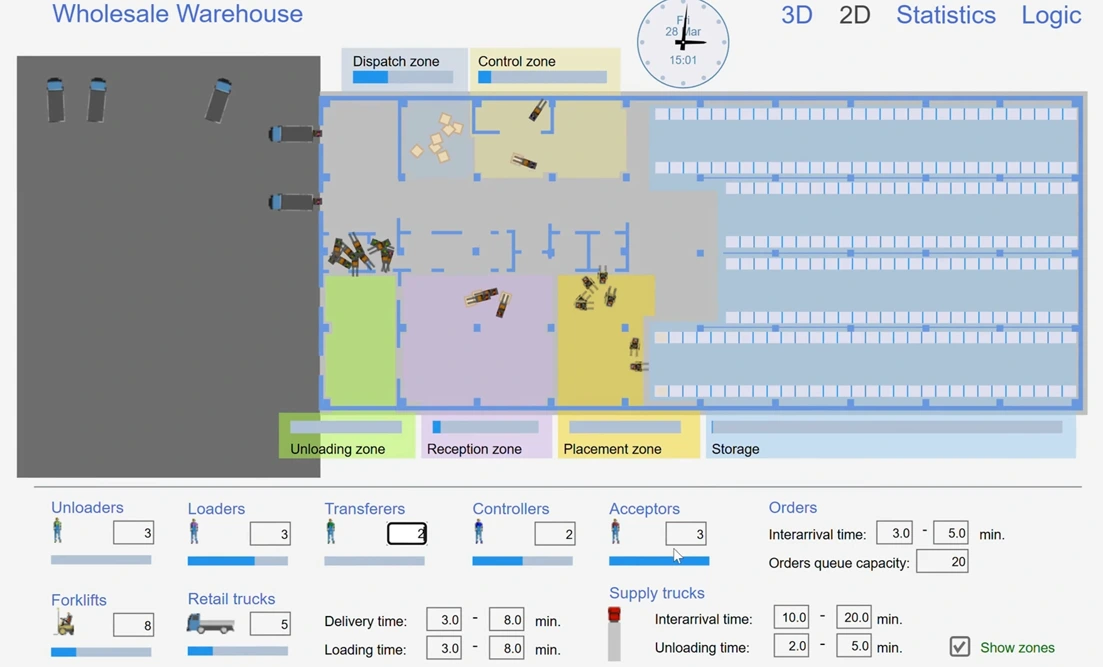
Rail Logistics
Rail network design, schedule optimization, and fleet planning.
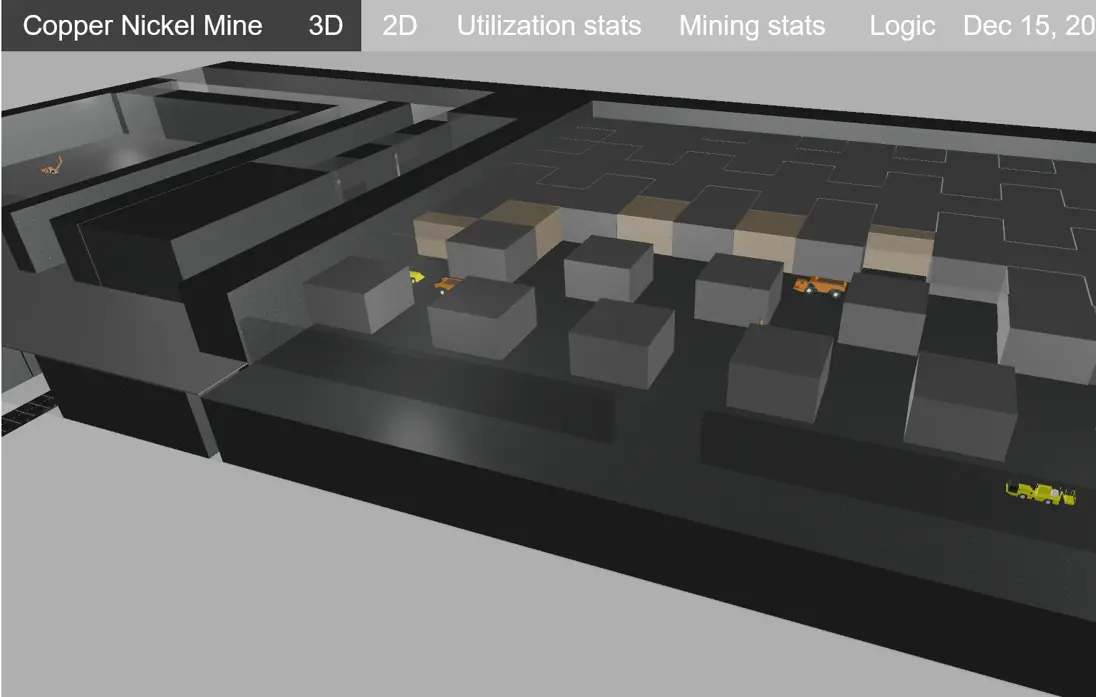
Mining & Metals
Mining forecasts, excavation planning, and fleet optimization.
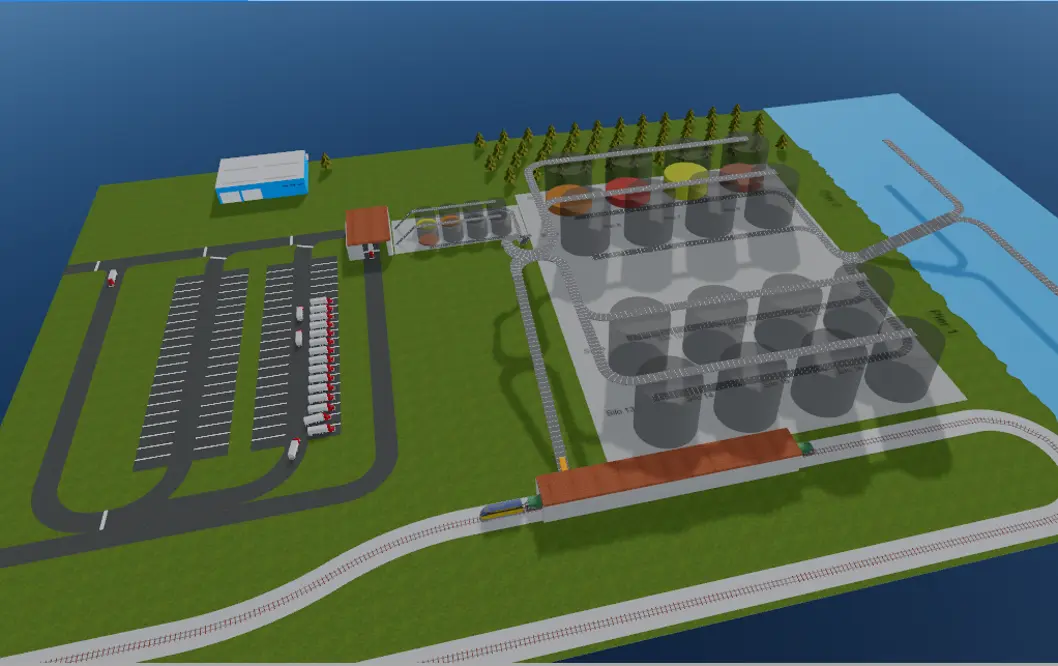
Oil & Gas
Operations planning, storage management, and oil transfer.
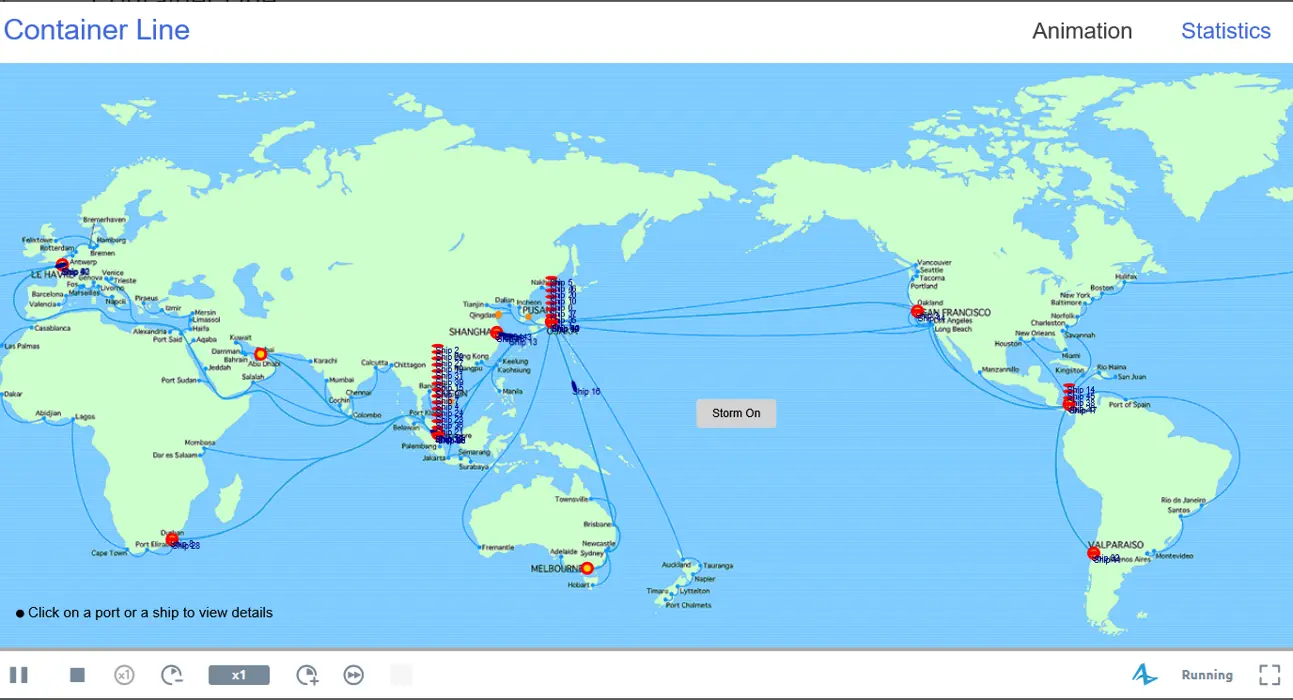
Ports & Terminals
Container operations, resource management, and risk assessment.
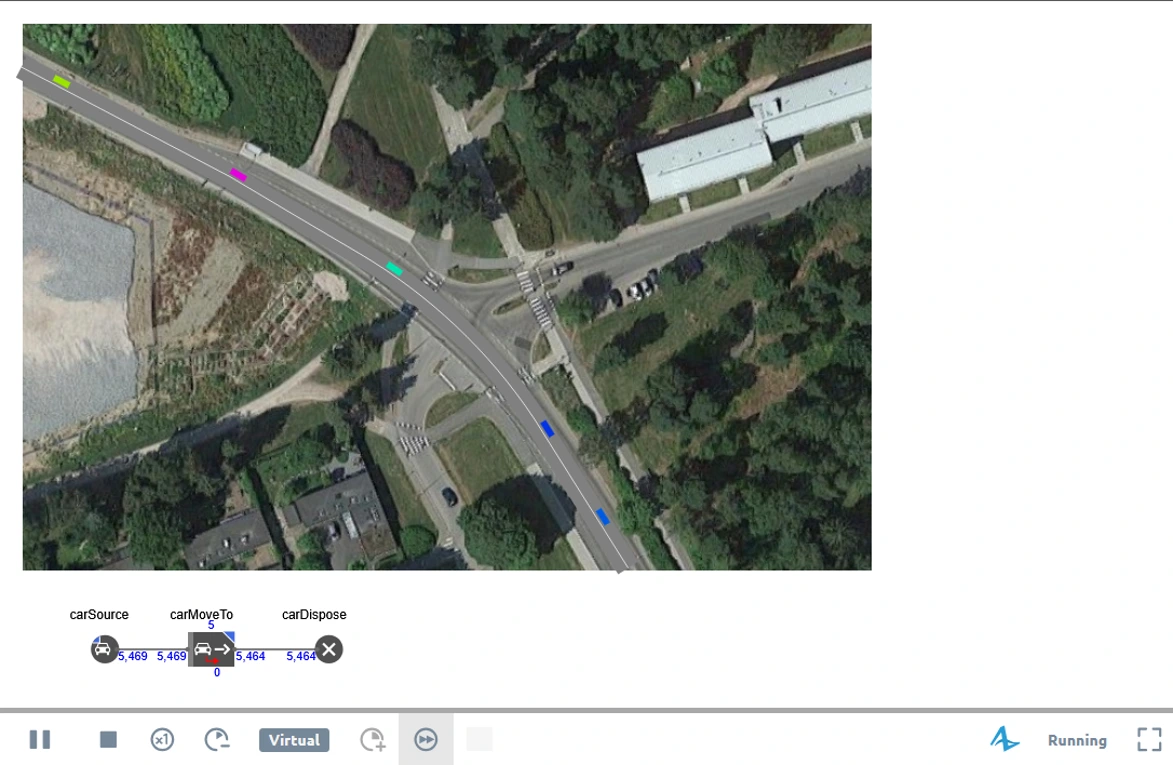
Road Traffic
Road planning, traffic analysis, and network optimization.
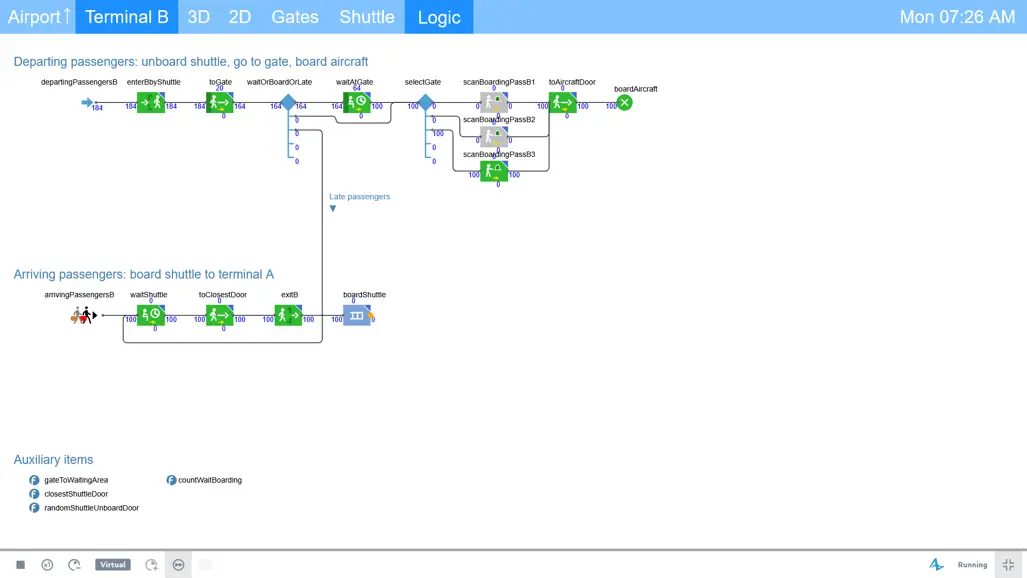
Passenger Terminals
Capacity planning, passenger flow, and evacuation analysis.
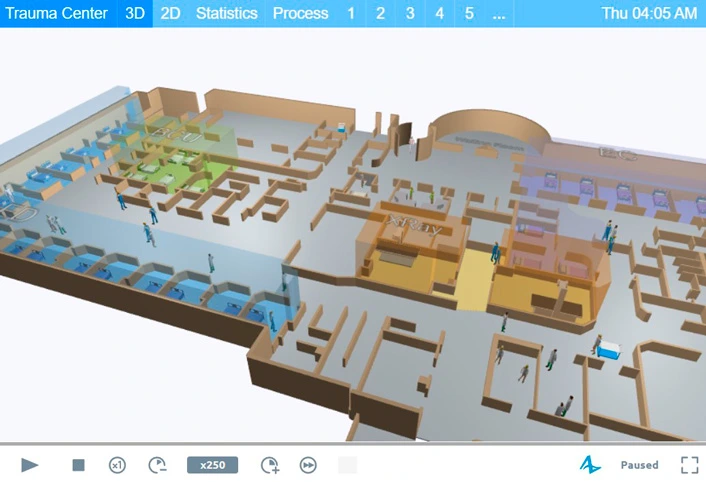
Healthcare
Facility design, process improvement, and policy evaluation.
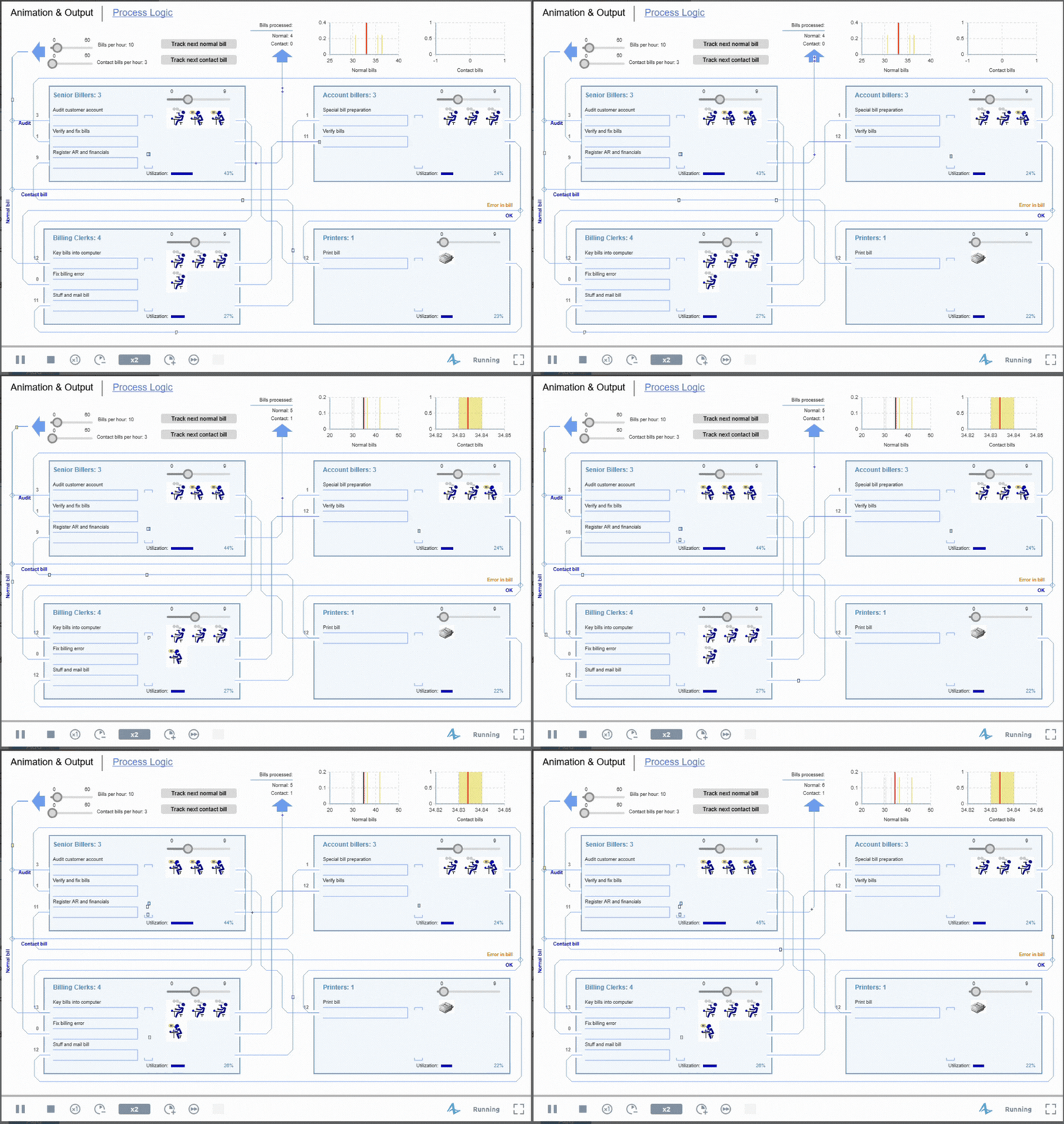
Business Processes
Operational efficiency, cost reduction, and bottleneck analysis.
Asset Management
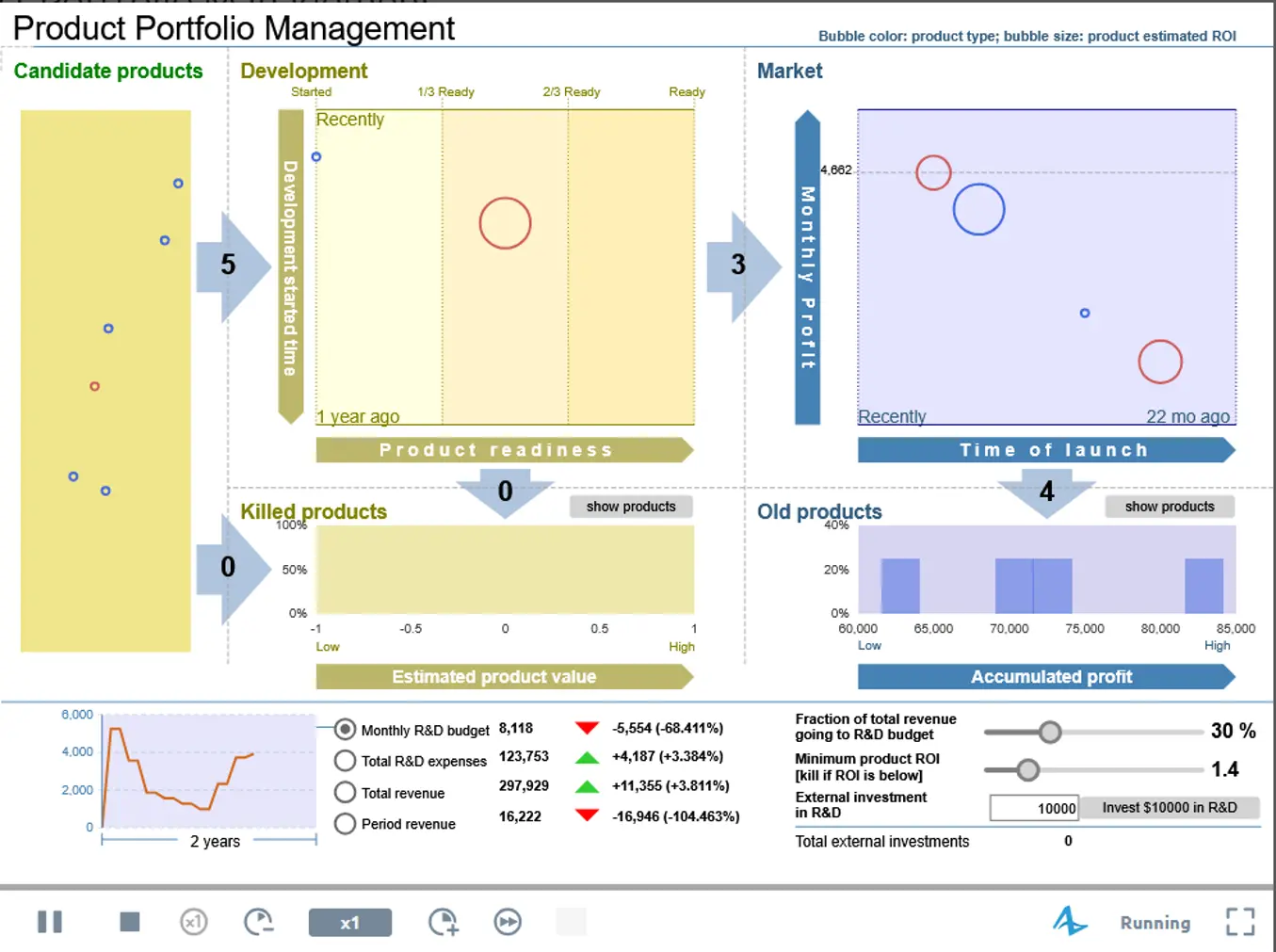
Forecasting, risk analysis, and project prioritization.
Marketing
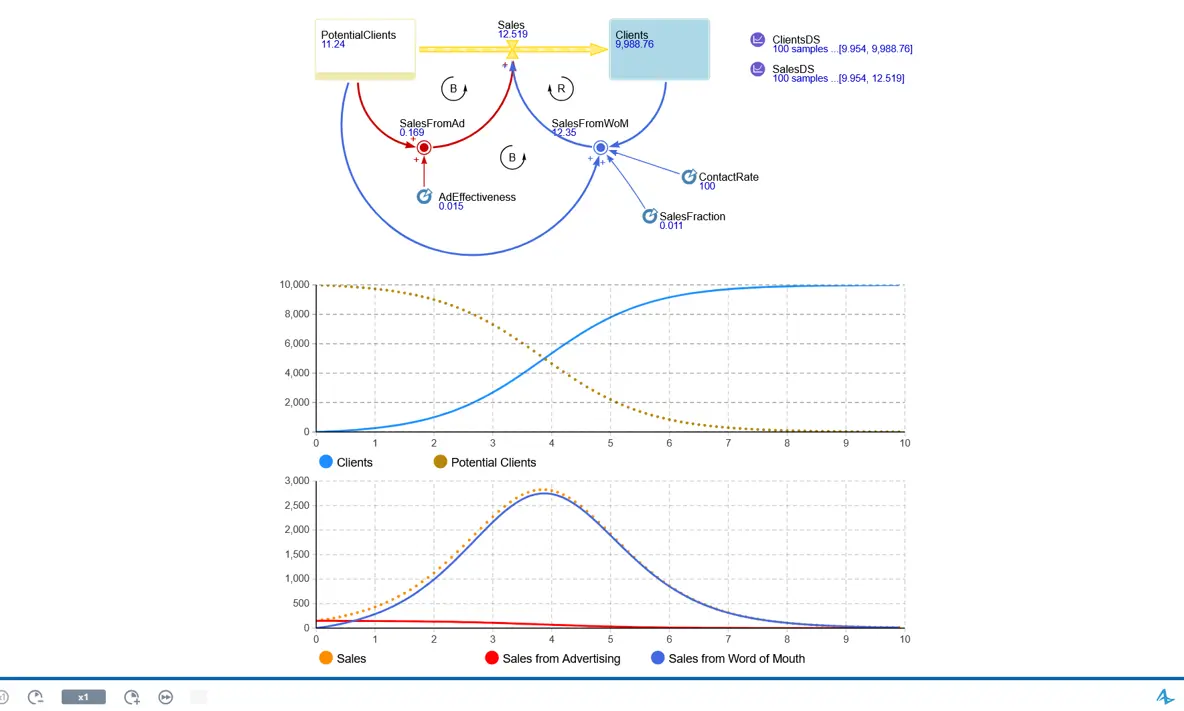
Consumer behavior, market dynamics, and promotion analysis.
Social Processes
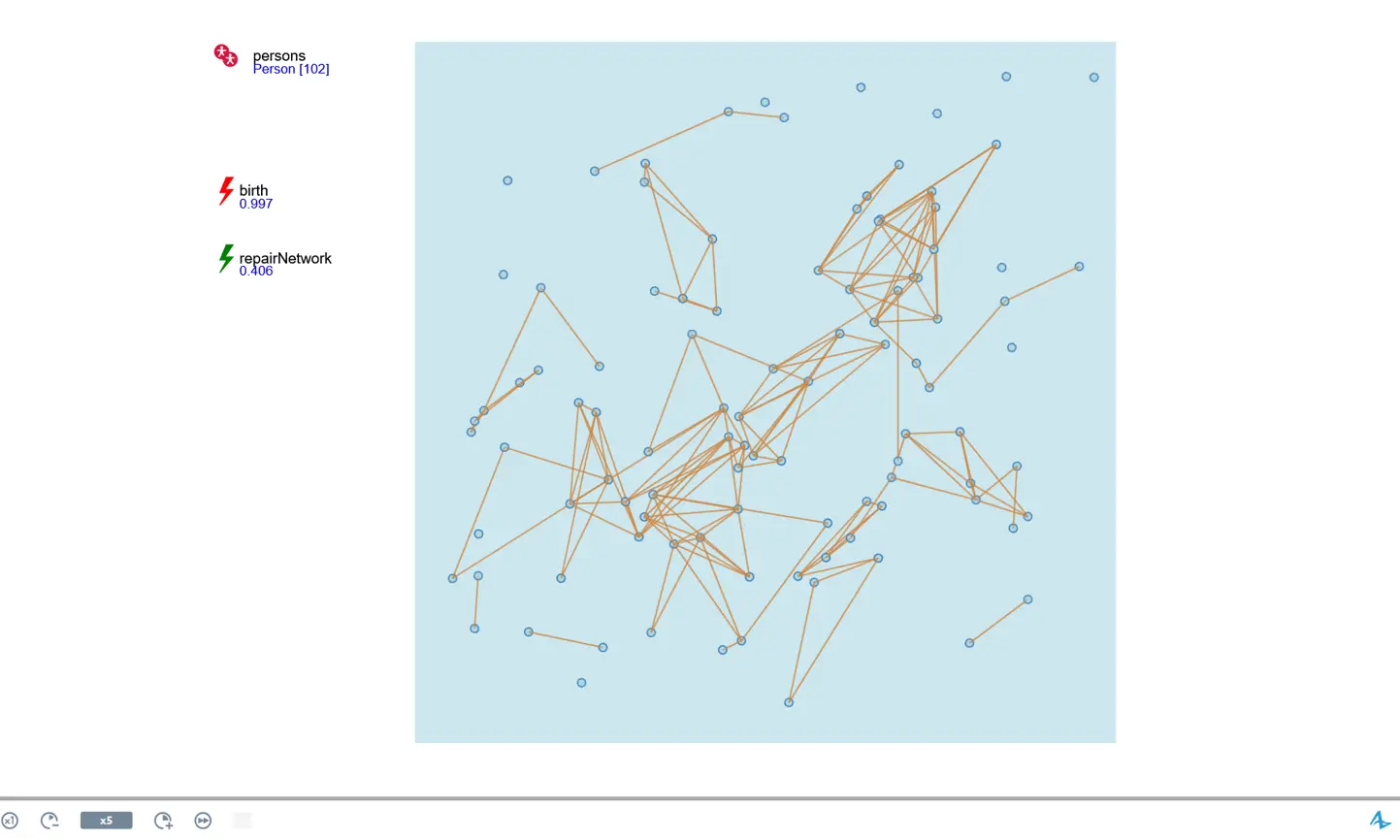
Population dynamics, policy evaluation, and social behavior.
Defense
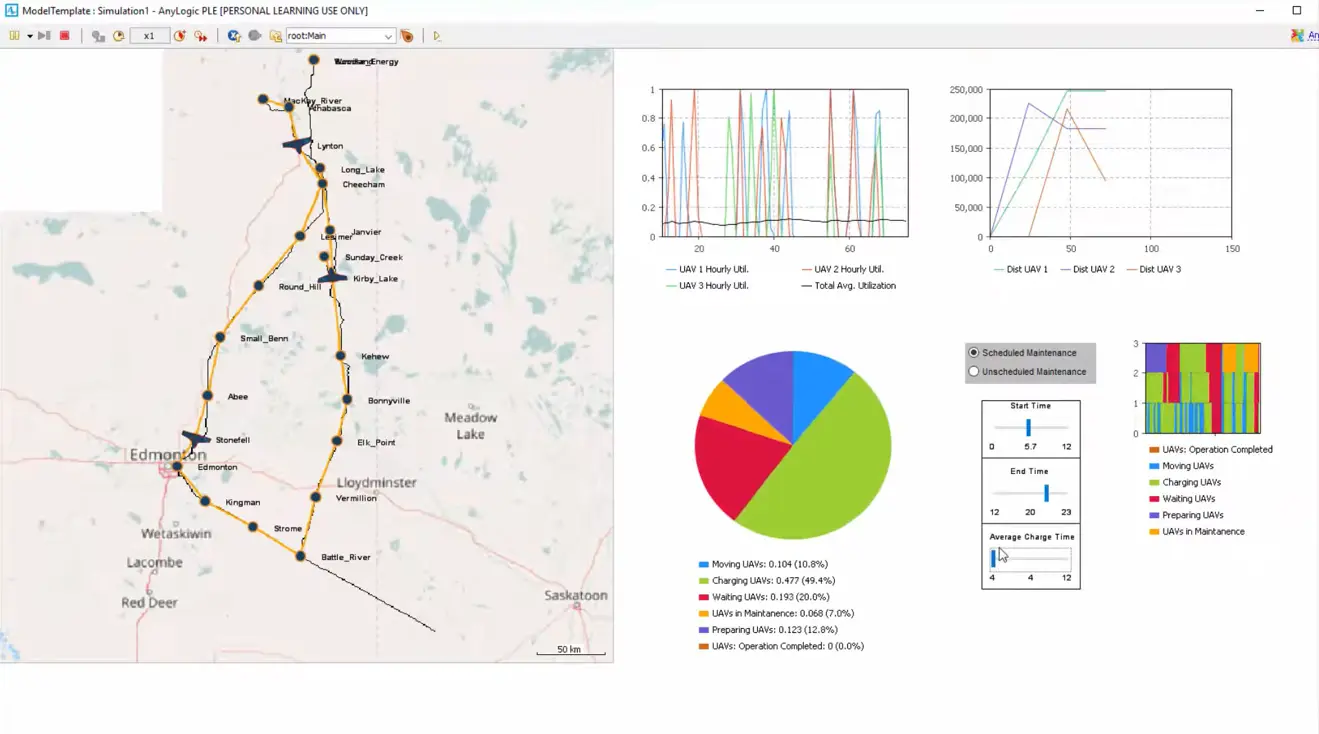
Maintenance planning, operations, and military logistics.
Products
AnyLogic‘s portfolio includes three complementary solutions for simulation modeling, supply chain optimization, and cloud-based simulation.

AnyLogic Professional – The premier development environment for engineers and simulation modelers. Delivers multimethod modeling capabilities, domain-specific libraries, 2D/3D visualization, standalone Java application export, and native AnyLogic Cloud integration.

AnyLogistix Studio / Enterprise – The dedicated supply chain software combining dynamic AnyLogic simulation with mathematical optimization solvers (Gurobi). Engineered for supply chain managers, logistics analysts, and network planners.


AnyLogic Cloud – The enterprise cloud infrastructure for executing, managing, and embedding AnyLogic simulation models at scale across distributed computing clusters