Supply chain design, risk analysis, and scenario testing.
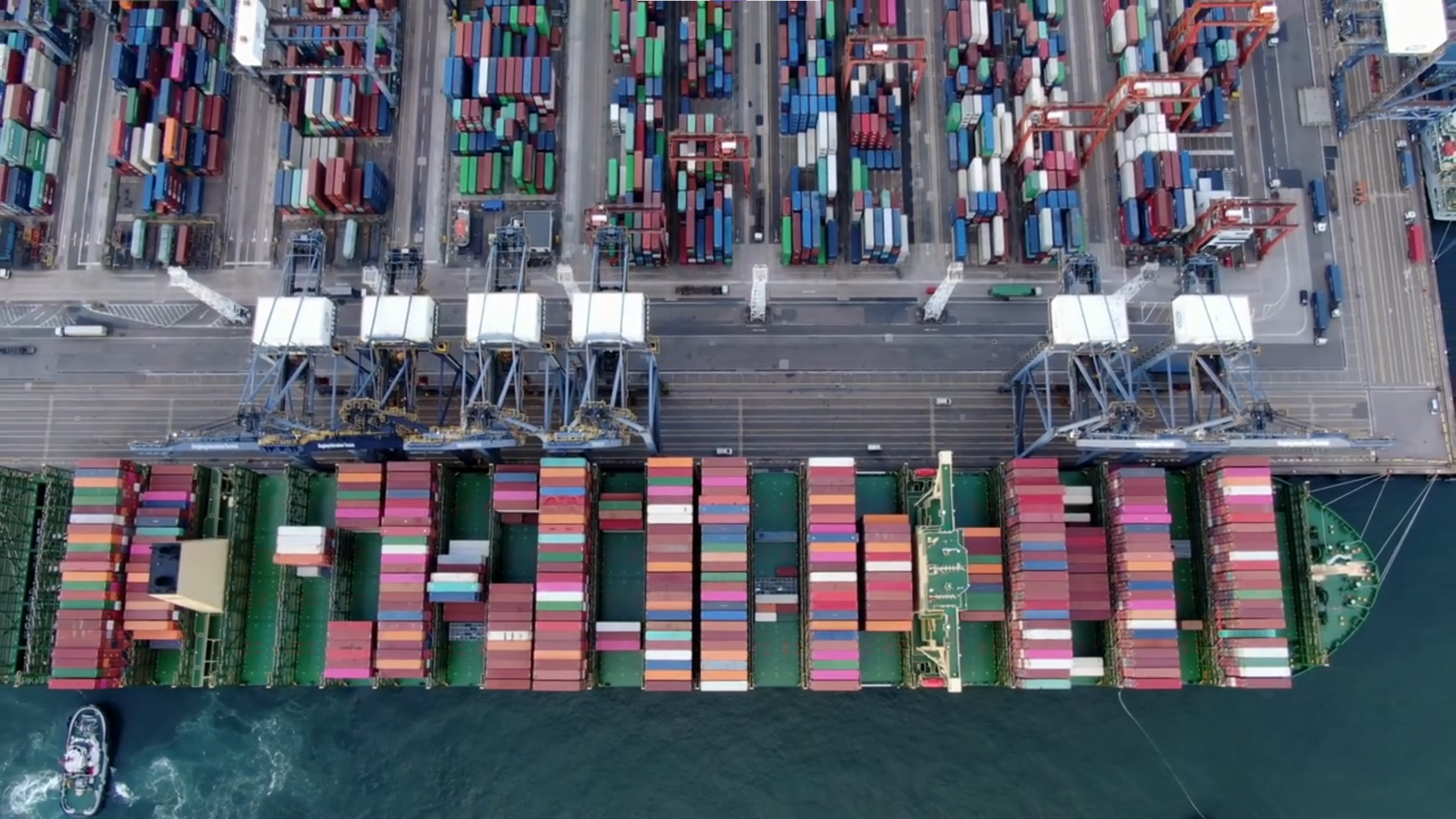


AnyLogic: Multimethod Simulation Software
AnyLogic is multimethod simulation software developed by The AnyLogic Company. It helps analysts, engineers, and managers understand complex business systems, evaluate alternatives, and make informed decisions before implementing changes in the real world.
AnyLogic is the global standard in multimethod simulation software, designed to model, analyze, and optimize complex processes across manufacturing, intralogistics, transportation, and service systems.
AnyLogic natively integrates the three primary modeling methodologies: Discrete Event (DES), Agent-Based (ABM), and System Dynamics (SD). Organizations can use them within a single environment to evaluate alternative scenarios and reduce decision risk. They can also maximize asset utilization, remove bottlenecks, and boost throughput before making real-world capital investments.
Integrated Multimethod Modeling
AnyLogic removes the constraints of traditional discrete-event-only tools by allowing modelers to combine three distinct paradigms inside a single model architecture.
Each approach addresses a different level of abstraction, allowing a system to be represented with the level of detail most appropriate to the modeling objective.
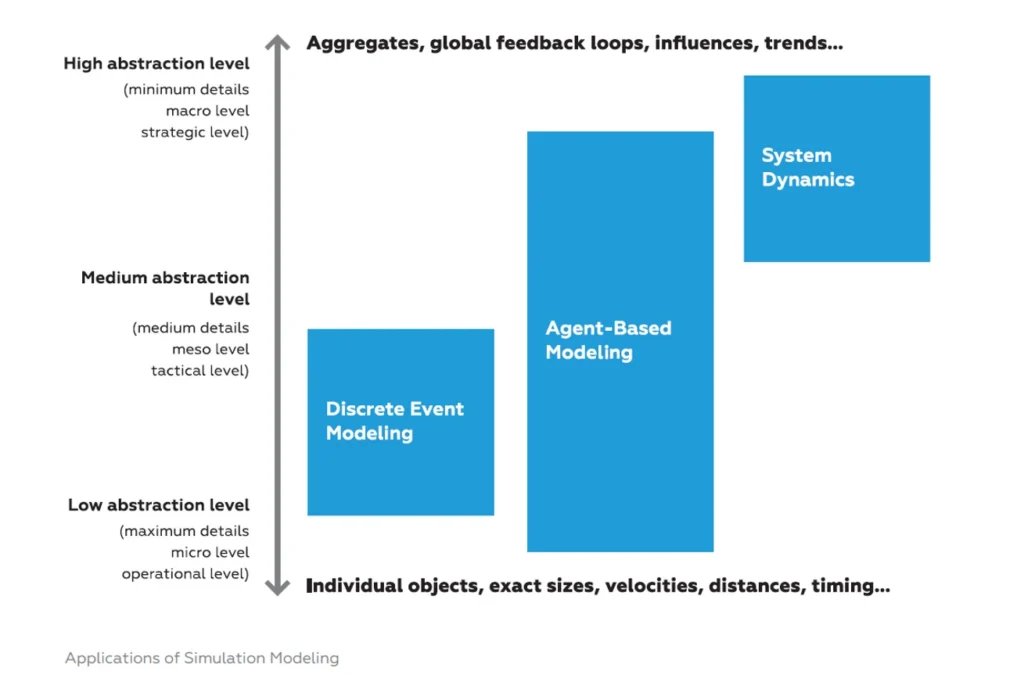
Together, these approaches cover different perspectives of a system. They range from detailed operational processes to individual entities and their interactions. They also capture higher-level system behavior.
- Discrete Event Simulation (DES): Detailed analysis of sequential processes, assembly lines, warehouse operations, and transactional workflows.
It models a system as a sequence of operations performed across entities. This makes it possible to represent complex processes through intuitive process flows. This approach helps analyze system behavior, identify bottlenecks, and evaluate different scenarios to improve operational efficiency. - Agent-Based Modeling (ABM): Capturing individual autonomous behaviors, competitive dynamics, decentralized decision-making, and market interactions.
It uses a bottom-up approach in which systems are represented as interacting agents, each with their own behaviors and decision-making rules. The overall behavior of the system emerges from the individual actions and interactions of these agents. This makes Agent-Based Modeling (ABM) suitable for complex systems such as markets, supply chains, logistics, traffic, and social processes. - System Dynamics (SD): High-level strategic modeling, continuous flows, macroeconomic dependencies, and feedback loops.
It operates at a high level of abstraction. Stocks and flows represent how quantities evolve over time within the system. System Dynamics (SD) is particularly suited to strategic management, marketing, macroeconomic, ecological, and social systems. In these contexts, feedback relationships and interdependencies play a central role.
Domain-Specific Libraries
AnyLogic includes six ready-to-use libraries for modeling business processes and specialized operational environments.
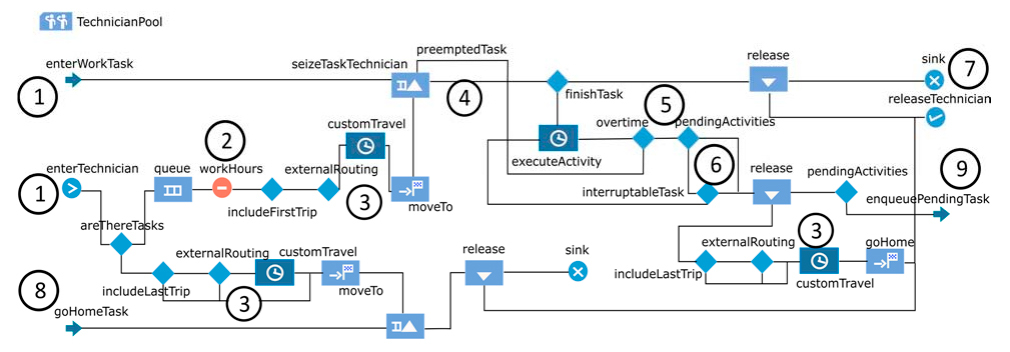
Process Modeling Library: Model and optimize business processes and operational workflows, from service operations and logistics chains to complex resource-constrained processes. It also serves as the foundation for the other domain-specific libraries.
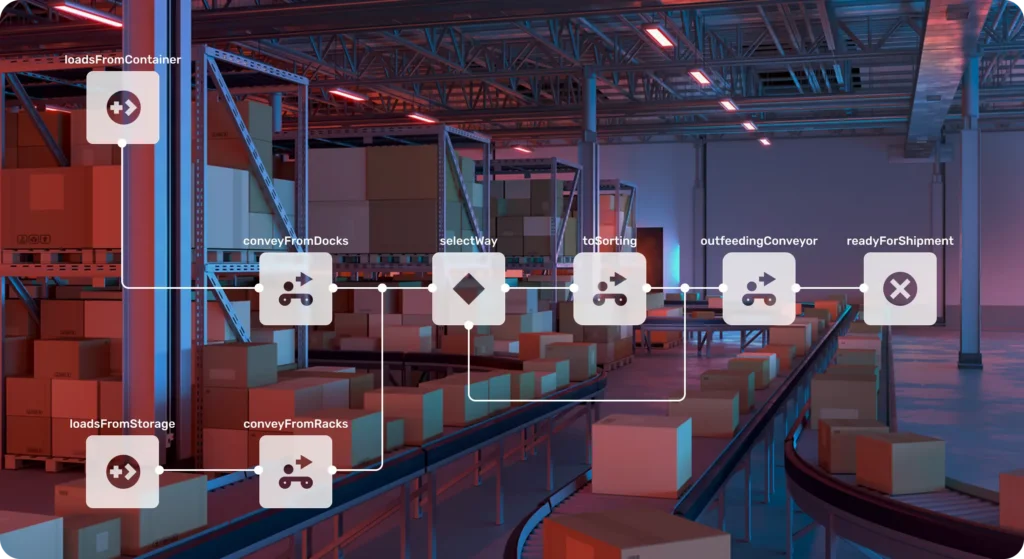
Material Handling Library: Model and control modular conveyor networks, custom AGV/AMR fleets with automatic routing and collision avoidance, overhead cranes, processing stations, and automated storage systems (ASRS).
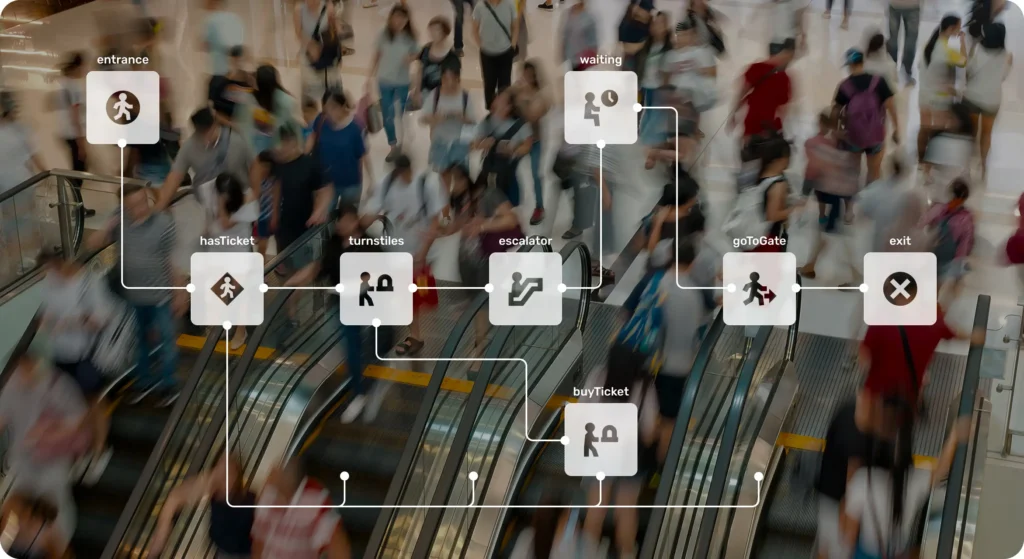
Pedestrian Library: Realistic simulation of high-density pedestrian dynamics in airports, train stations, and public venues, featuring density heatmaps and evacuation path calculations.
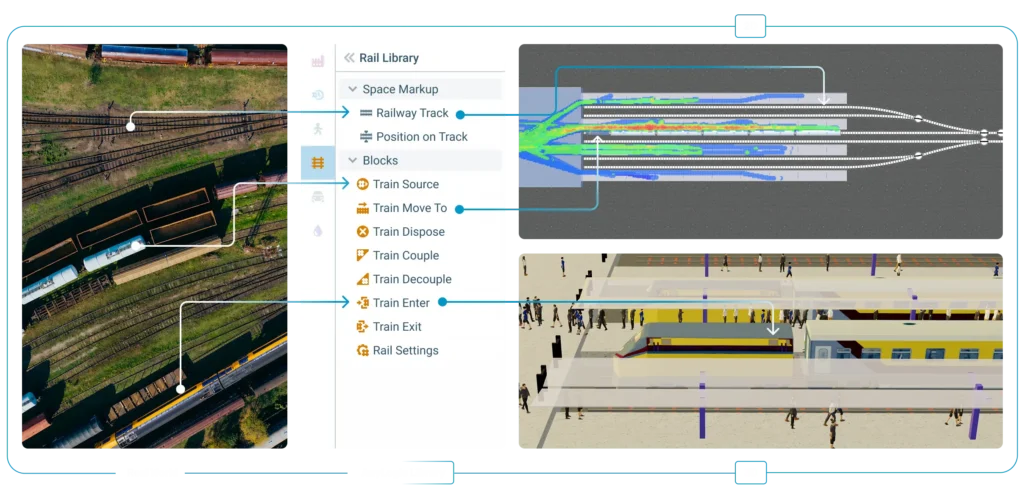
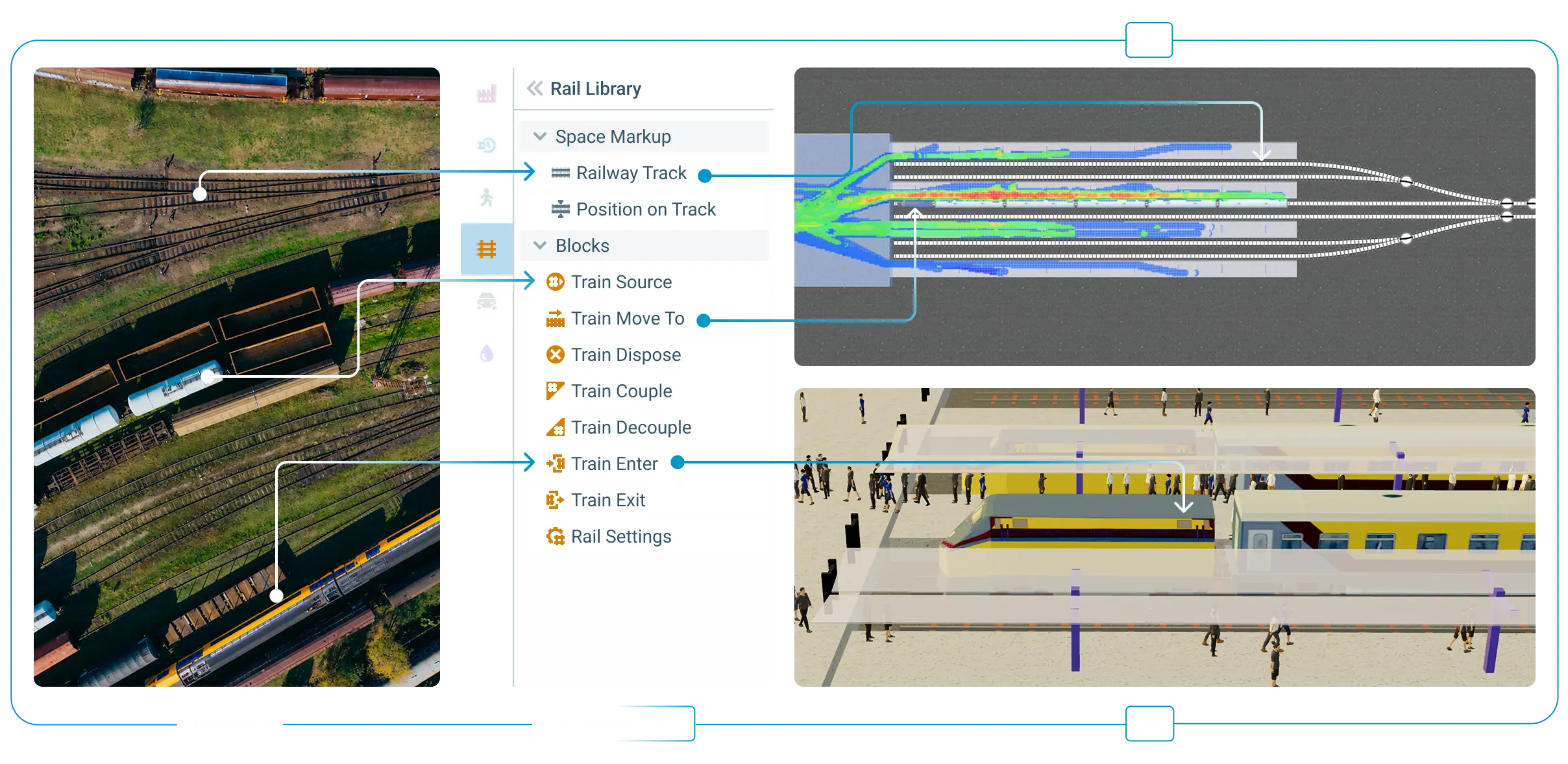
Rail Library: Model railway operations, including train movements, yard switching, and rail terminal processes. Evaluate operating strategies, resource utilization, and capacity.
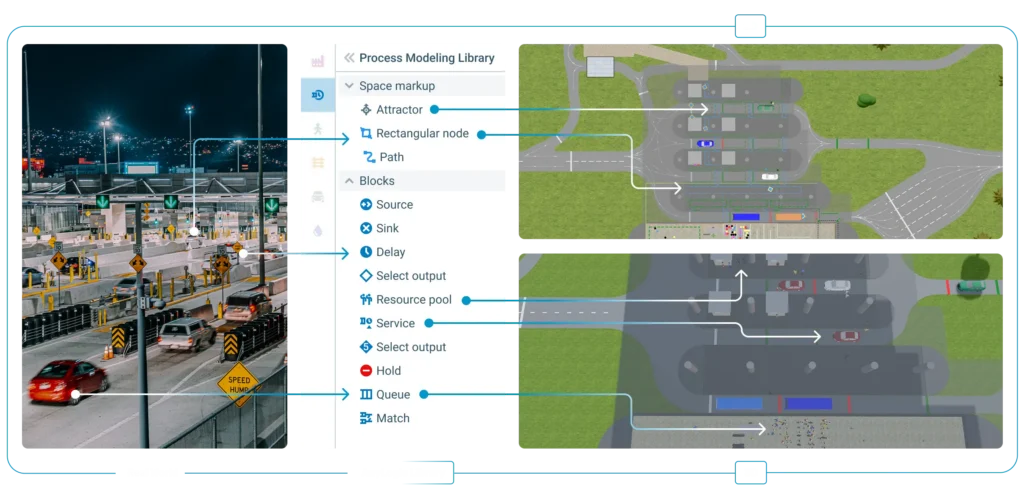
Road Traffic Library: Simulate vehicle movements on roads, at intersections, and within industrial sites. Analyze traffic flows, congestion, and the impact of alternative road layouts and traffic control strategies.
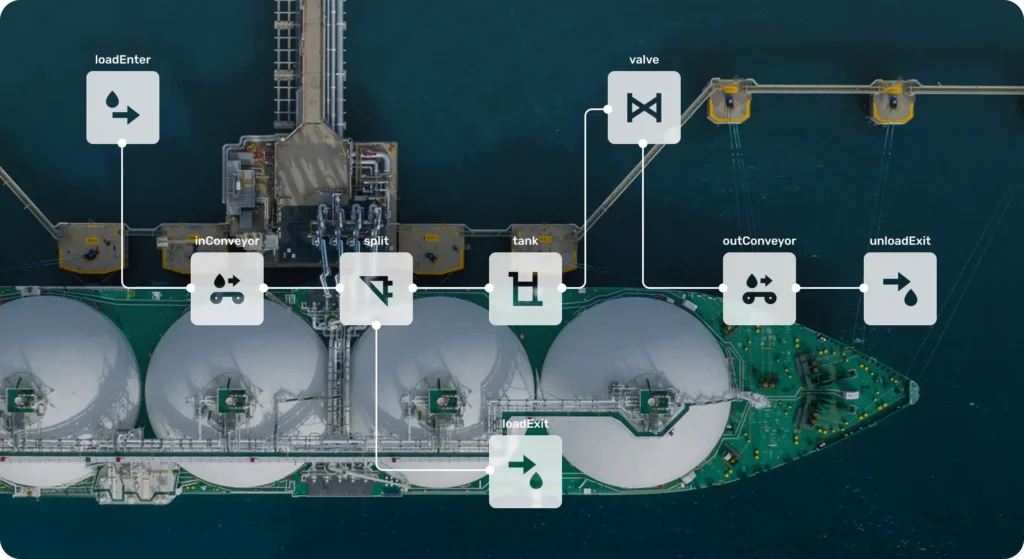
Fluid Library: Track and control continuous fluid, pipeline, and bulk material flows for mining, oil & gas, chemicals, and food production.
Native 2D/3D Visualization & GIS Mapping
AnyLogic models incorporate interactive 2D and 3D visualizations. They also provide native GIS integration and support for CAD drawings and custom 3D models.
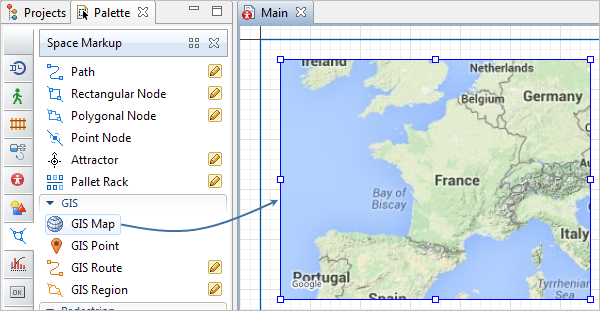
Native GIS Integration: Search, place, and route assets on global OpenStreetMap data with automatic route calculations across road, rail, and maritime networks.
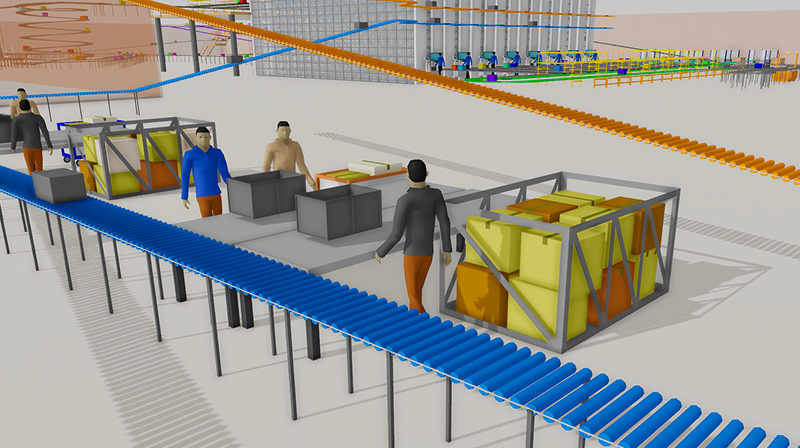
3D Visual Animation: Real-time lighting, shadows, skyboxes, and native import support for industry-standard 3D formats (glTF, OBJ, FBX, CAD).
Open Architecture & Advanced Customization
AnyLogic combines visual modeling with a fully extensible programming environment. This gives organizations the flexibility to customize models, integrate external technologies, and connect simulation with existing enterprise systems.
- 100% Java-Based Engine: Full freedom to write custom logic, create proprietary object libraries, and integrate external Java libraries.
- AI & Python Connectivity: Seamless communication with Python-based machine learning and Reinforcement Learning (RL) frameworks to train autonomous agents inside digital twin environments.
- Enterprise Data Connectivity: Built-in connectivity for Microsoft Excel, text/CSV files, and relational databases such as MS SQL, Oracle, PostgreSQL, and MySQL. Connections to external systems through REST APIs can be implemented using custom Java code within the model.
From custom model logic to enterprise data and AI integration, AnyLogic can be adapted to fit existing technologies, workflows, and digital infrastructure.
Optimization & Scenario Analysis
AnyLogic provides a rich experiment framework to evaluate alternative configurations and test parameter changes. It also enables users to analyze system behavior and identify optimized solutions under defined constraints.
- Scenario Analysis: Compare alternative system configurations and operating conditions using Parameter Variation, Sensitivity Analysis, and Monte Carlo experiments.
- Optimization: Automatically search for parameter values that improve system performance while considering defined objectives, constraints, and requirements.
- Dynamic Simulation & Stress-Testing: Evaluate how variability, uncertainty, and changing operating conditions affect system performance across multiple simulation runs.
- Performance Analysis: Compare key performance indicators across scenarios to support data-driven decisions and identify the most effective configuration.
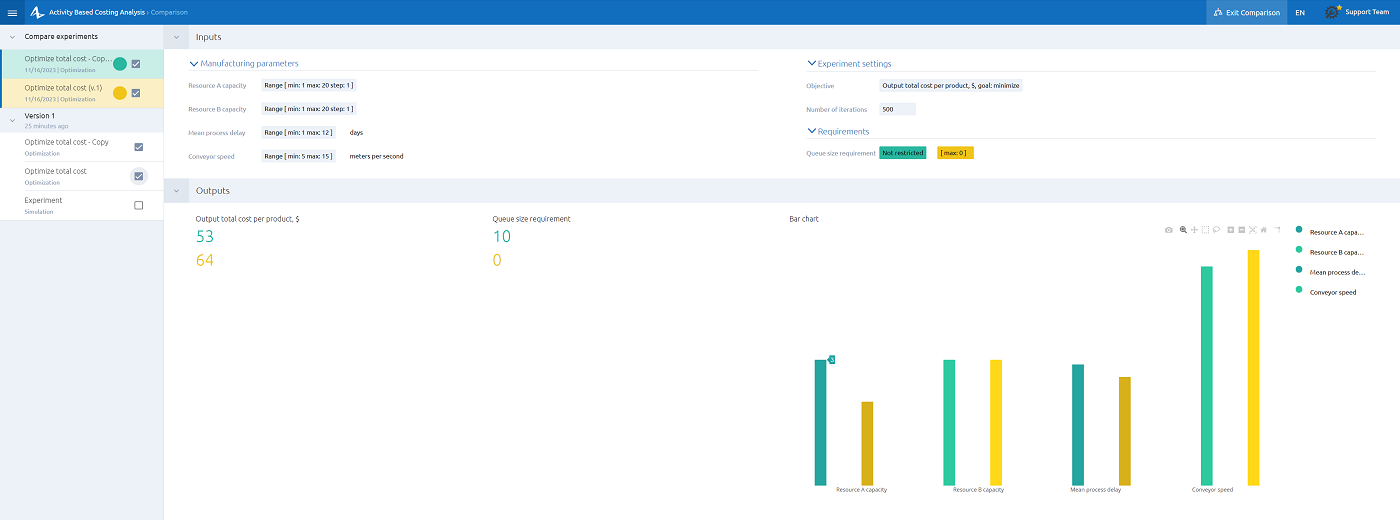
AnyLogic Experimenter & OptQuest Integration
Run multiple simulation experiments to evaluate uncertainty, compare scenarios, and analyze parameter sensitivity. Use AnyLogic’s built-in genetic optimization engine or the optional OptQuest engine to search for parameter values that improve model performance under defined objectives and constraints.
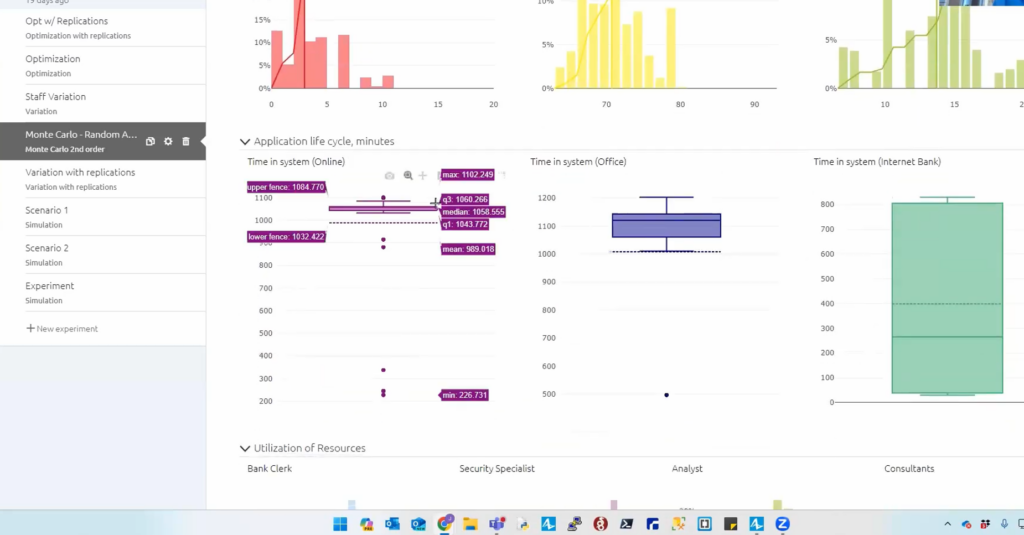
- Parametric & Monte Carlo Experiments: Distribute hundreds of simulation replications across multi-core CPUs in parallel to perform sensitivity analyses and quantify operational risk.
- OptQuest Optimization Engine: Available as a paid option for the Professional and University editions. In the Personal Learning Edition (PLE), OptQuest is limited to 500 iterations and 7 decision variables.
Supply Chain Design & Optimization
anyLogistix is The AnyLogic Company’s dedicated software for designing, optimizing, and testing supply chain networks.
Industry 4.0 & Digital Transformation
AnyLogic supports Industry 4.0 and digital transformation by turning simulation into a dynamic decision-support tool for complex industrial systems. By combining simulation with real-world operational data, organizations can model production and logistics processes and test alternative scenarios. This approach helps them anticipate the impact of changes and optimize operations before implementing decisions in the real system.
Digital Twins & System Integration
Organizations can connect AnyLogic simulation models to operational data and enterprise systems through databases, APIs, and platforms such as MES, ERP, WMS, and SCADA. This enables organizations to develop digital twins that reflect the behavior of real-world processes. These digital twins use current operational data to evaluate scenarios, forecast system performance, and support planning and optimization decisions.
By integrating simulation with the broader enterprise technology landscape, digital twins can become continuously updated decision-support tools rather than isolated analytical models.
AnyLogic Online & Private Cloud
Bring simulation from model development into everyday business use. Develop models, test alternatives, and share results with the people making operational and strategic decisions, choosing browser-based modeling or deployment within your organization’s infrastructure.
AnyLogic Online
Create, develop, and run simulation models in your browser with AnyLogic Online, switching between desktop and online environments as your project requires. Collaborate on modeling projects, manage versions, and give colleagues access to interactive experiments and results without requiring a local desktop installation.
AnyLogic Private Cloud
Deploy AnyLogic Private Cloud in your own data center or on your preferred cloud infrastructure. Keep models, data, and processing within your organization’s environment, while enabling teams to run experiments, share models, and connect simulation with business workflows. Models are created and updated in AnyLogic desktop or AnyLogic Online before deployment; model creation and editing are not currently available within Private Cloud.
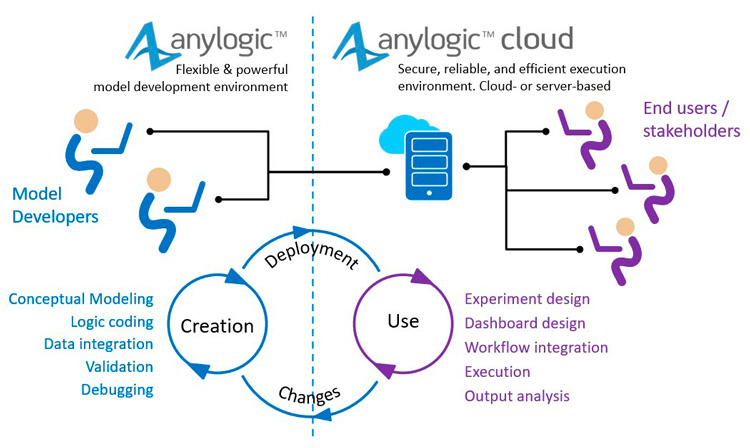
- Experiment and optimize – Use Parameter Variation, Monte Carlo, and Optimization experiments to explore alternatives, assess uncertainty, and identify better-performing configurations.
- Run experiments in parallel – Execute batches of simulations using the computing capacity available in your selected environment and edition.
- Analyze and compare results – Review completed runs through interactive dashboards, compare scenarios, and export results to Excel for further analysis.
- Share simulation with decision-makers – Let colleagues and clients change approved inputs, run scenarios, and review results without navigating the model’s internal structure.
Connect simulation to enterprise workflows. The Cloud REST API and JavaScript client library support programmatic model execution, retrieval of experiment results, and custom web interfaces, allowing simulation to become part of corporate applications, portals, and decision-support tools.
Big Data & Advanced Analytics
AnyLogic generates performance data during simulation, helping users analyze resource utilization, queue lengths, throughput, and other operational indicators. Results can be exported to databases or Excel/CSV files for further analysis, including reporting and visualization in Business Intelligence tools such as Power BI and Tableau.
Models can also use data from enterprise databases and files to define inputs, agent properties, and behaviors. Combining business data with simulation helps organizations evaluate scenarios, forecast system performance, and compare alternative decisions.
Industries
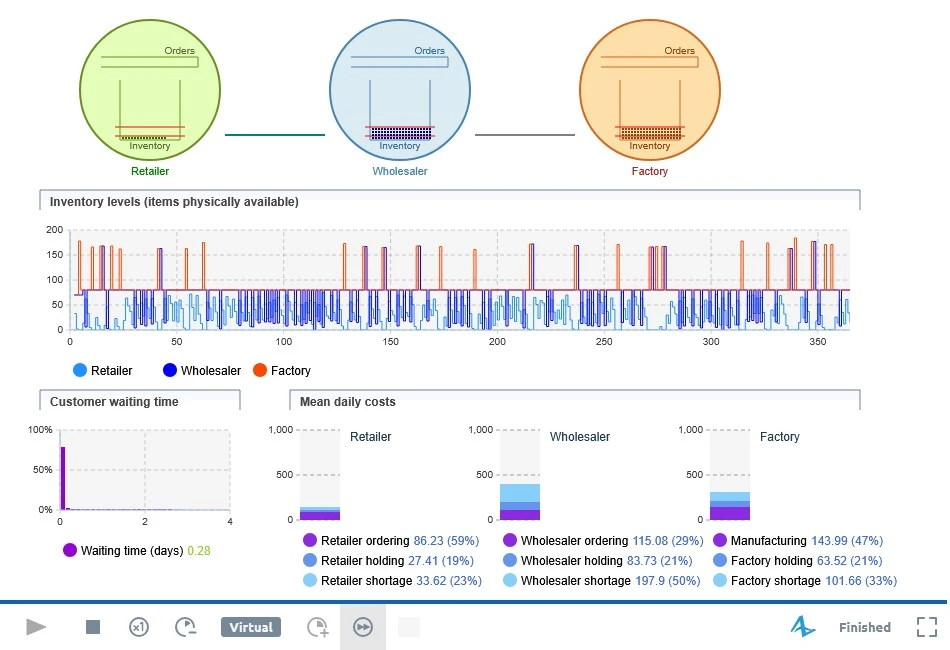
Supply Chains
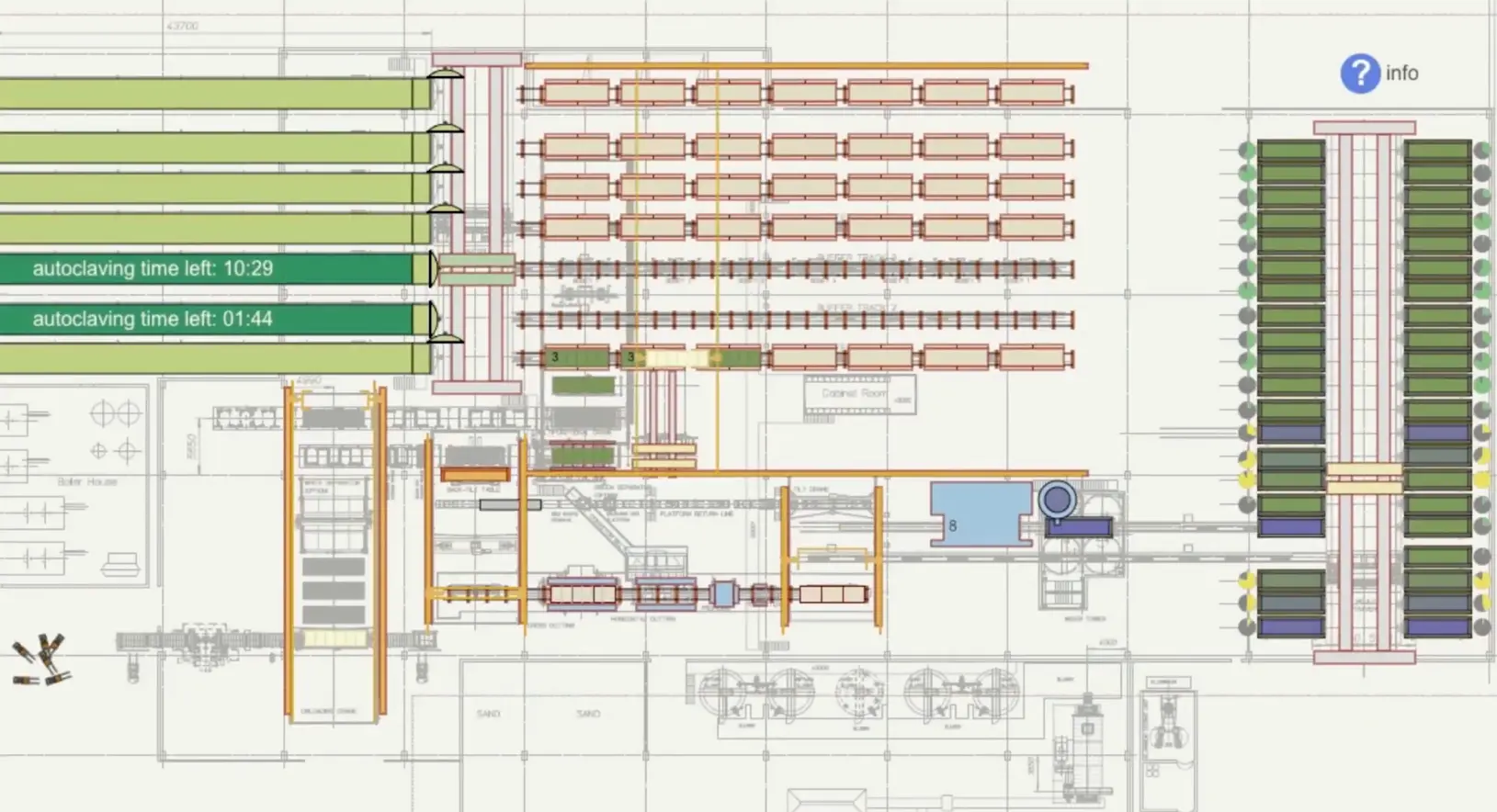
Manufacturing
Production planning, process improvement, and layout optimization.
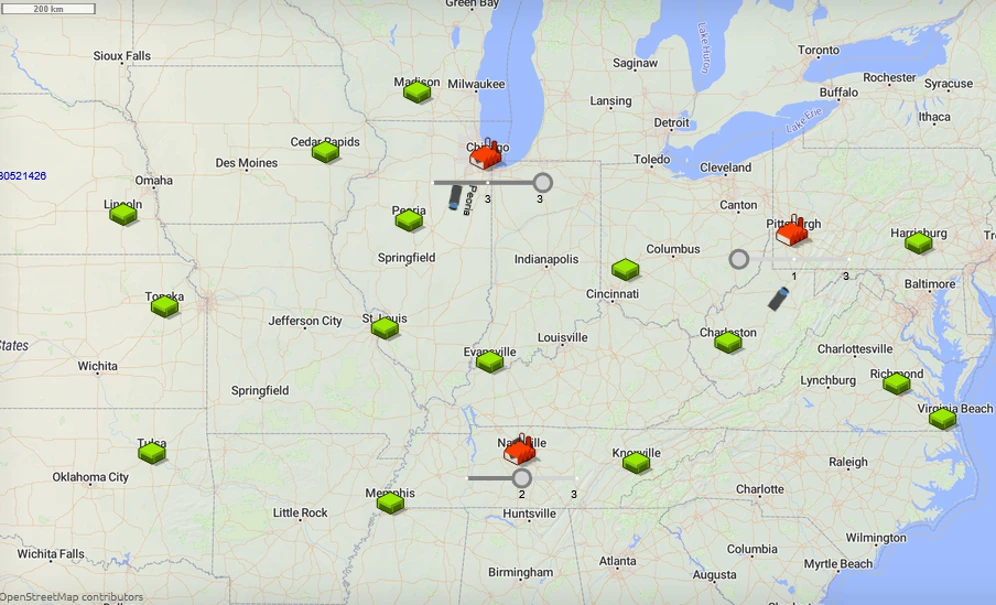
Transportation
Logistics planning, fleet management, and risk analysis.
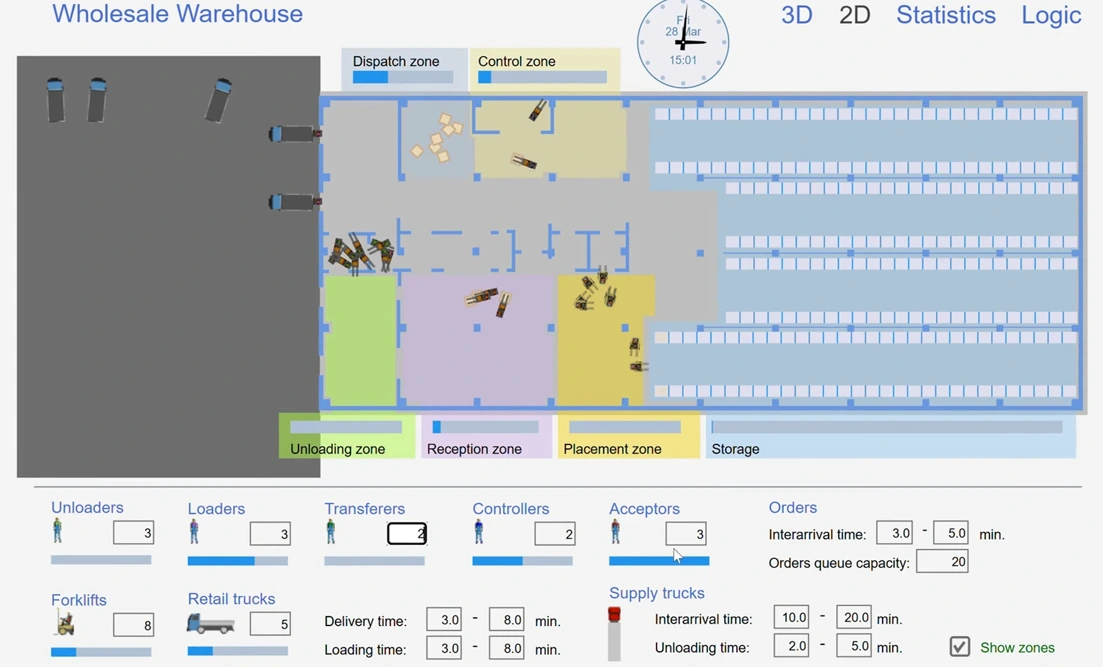
Warehouse Operations
Warehouse layout, picking optimization, and staffing.
Rail Logistics
Rail network design, schedule optimization, and fleet planning.
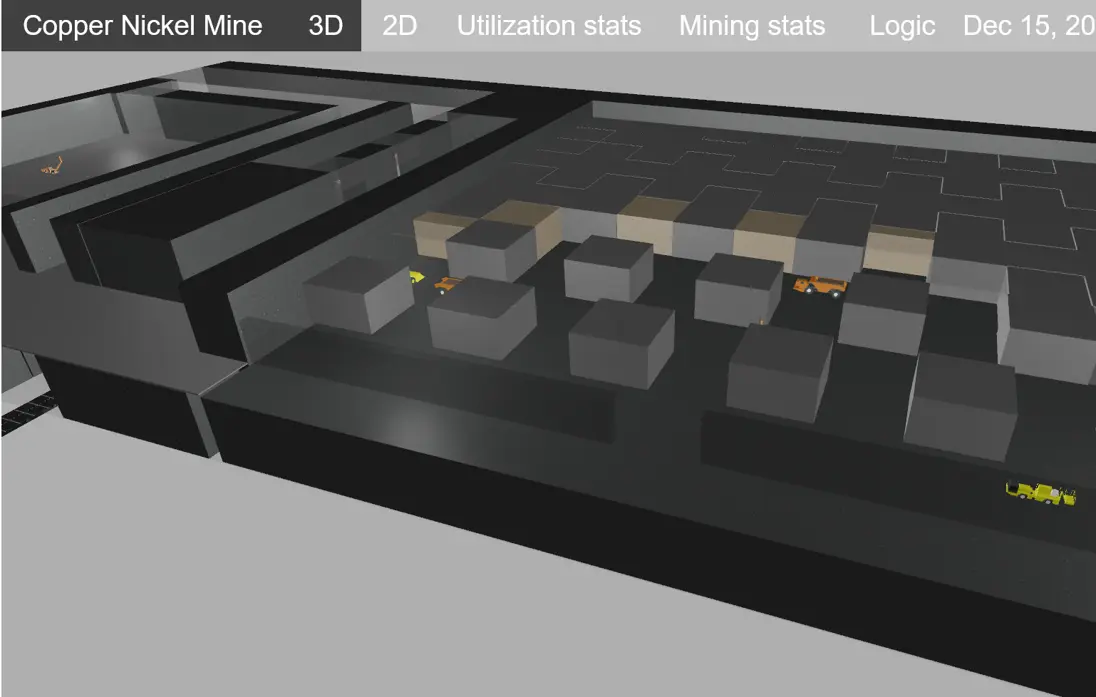
Mining & Metals
Mining forecasts, excavation planning, and fleet optimization.
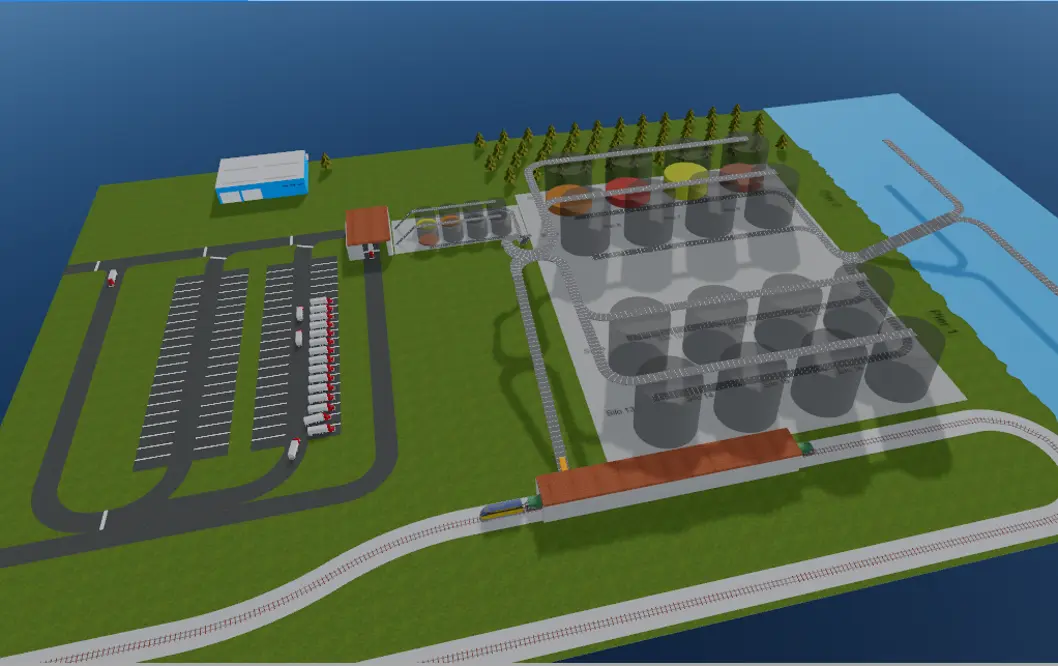
Oil & Gas
Operations planning, storage management, and oil transfer.
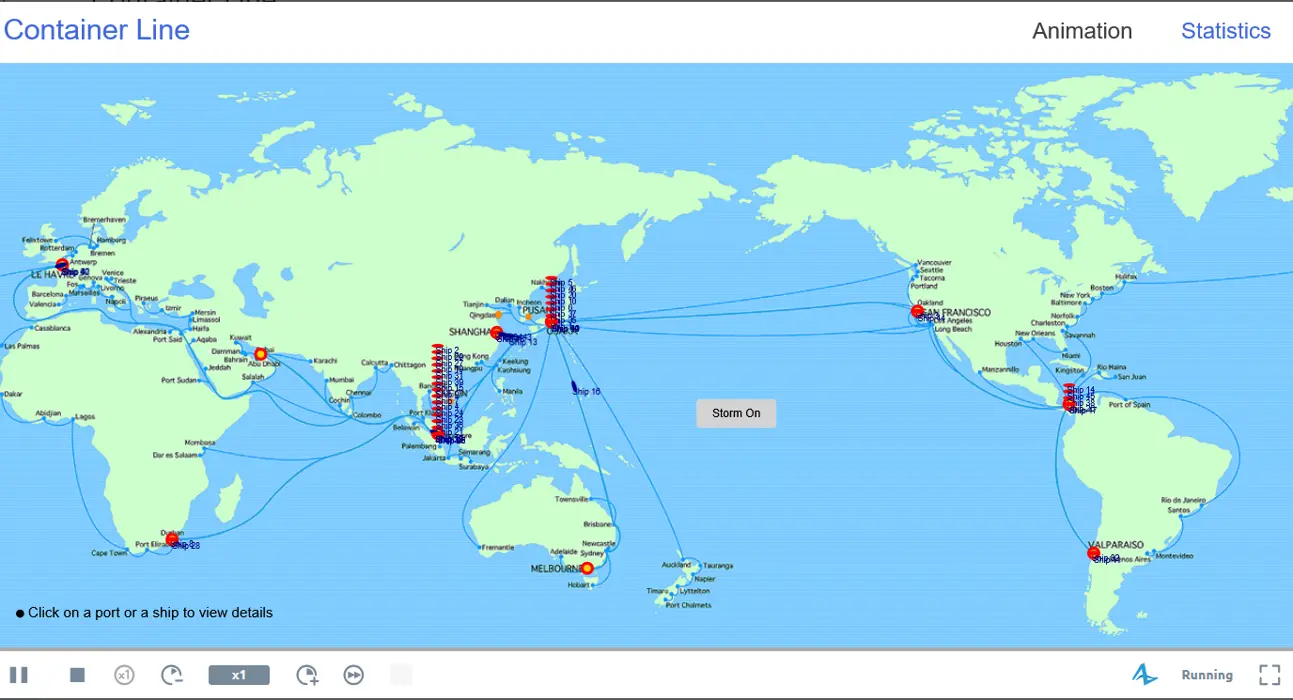
Ports & Terminals
Container operations, resource management, and risk assessment.
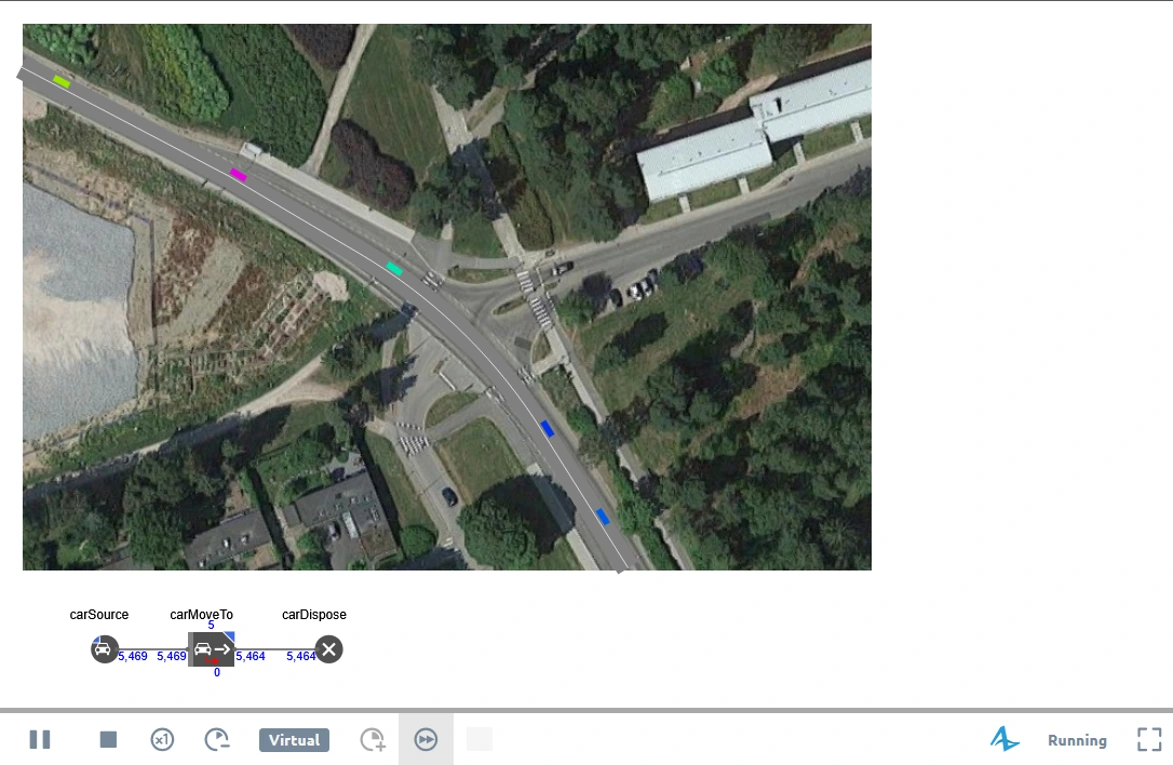
Road Traffic
Road planning, traffic analysis, and network optimization.
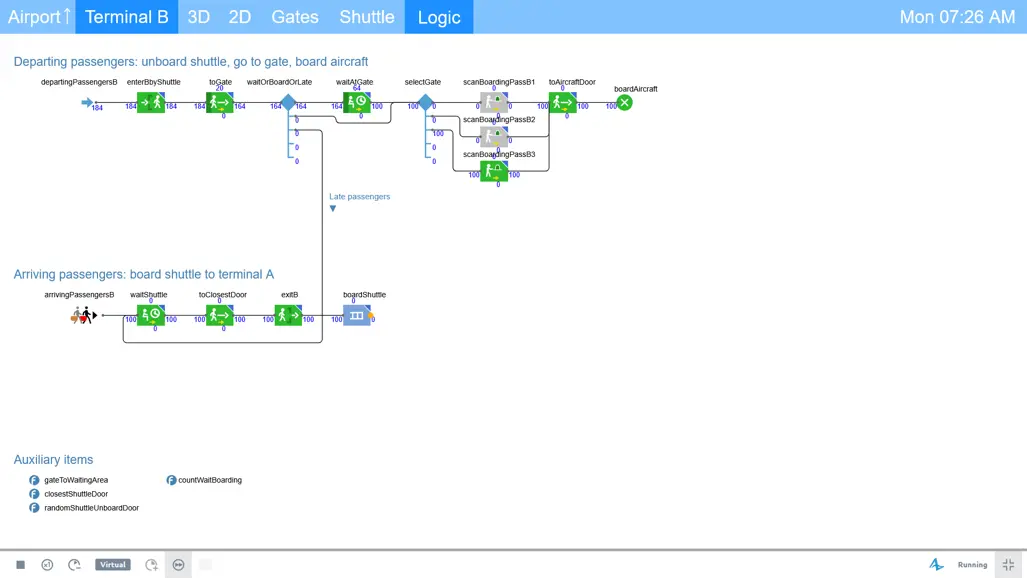
Passenger Terminals
Capacity planning, passenger flow, and evacuation analysis.
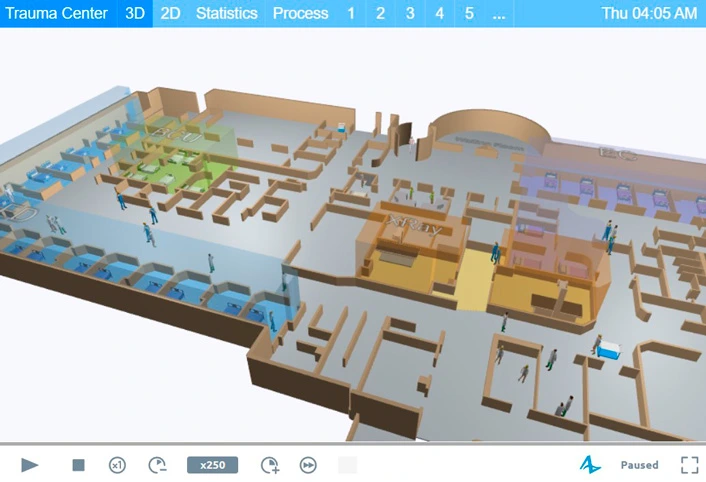
Healthcare
Facility design, process improvement, and policy evaluation.
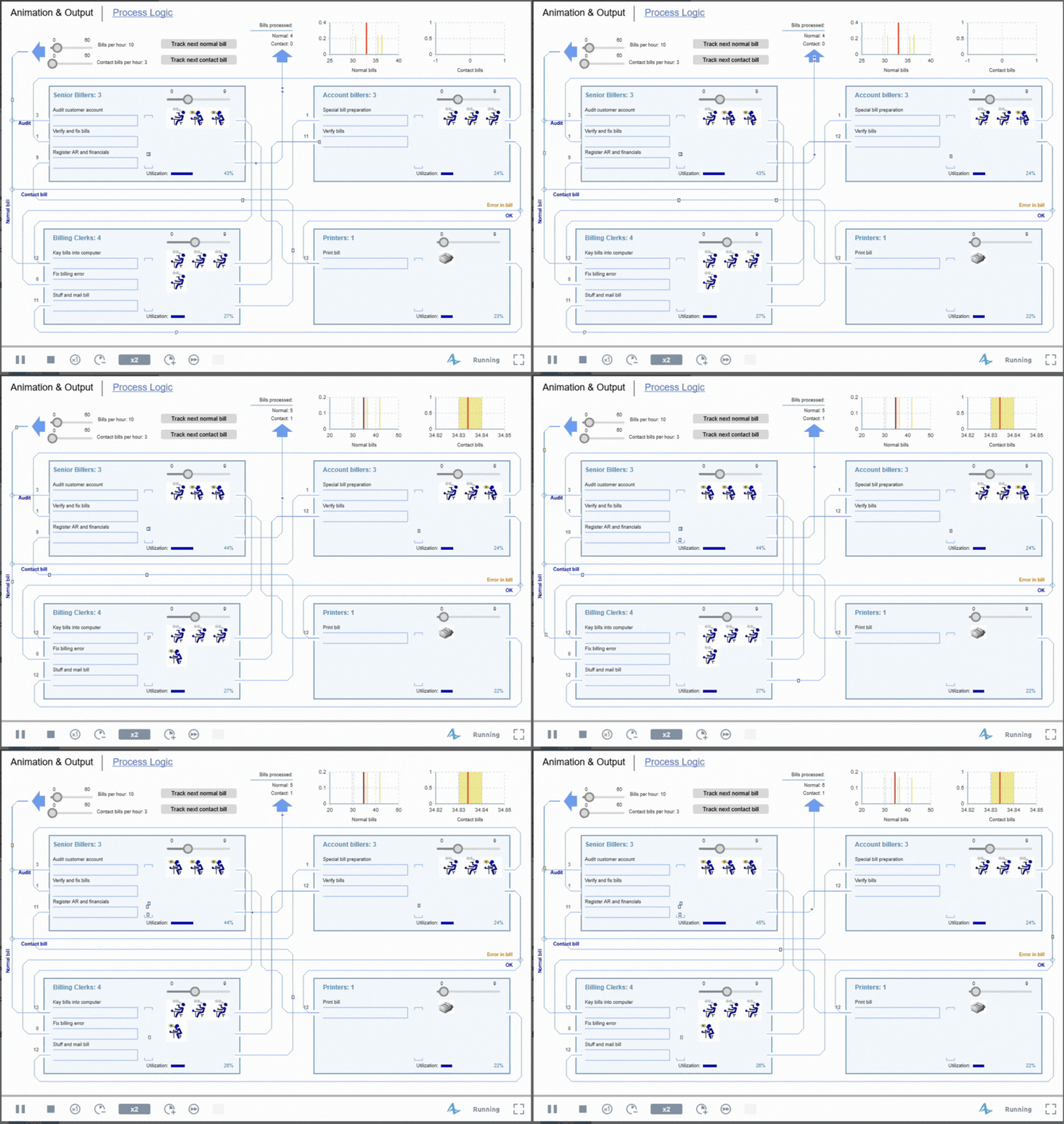
Business Processes
Operational efficiency, cost reduction, and bottleneck analysis.
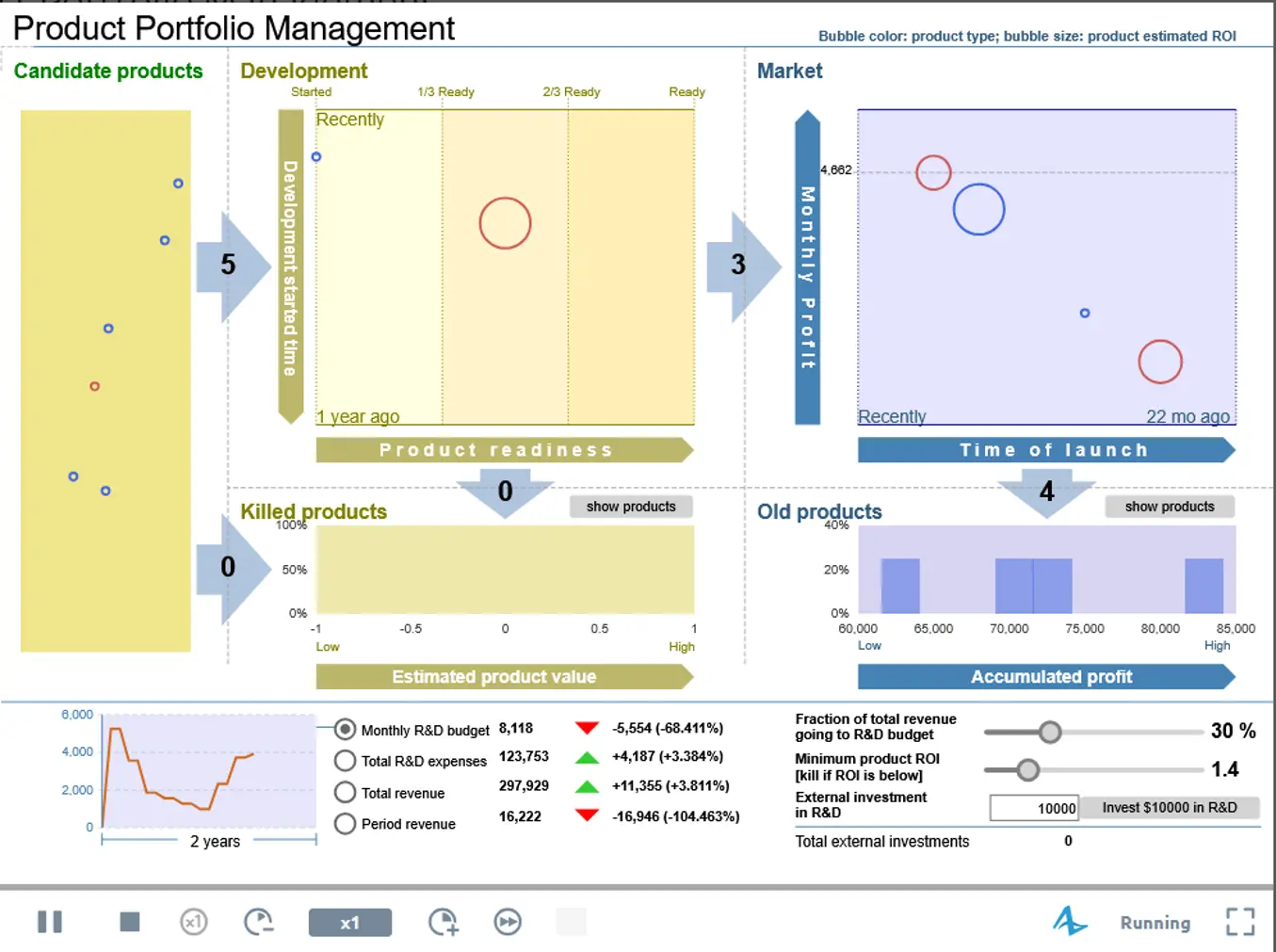
Asset Management
Forecasting, risk analysis, and project prioritization.
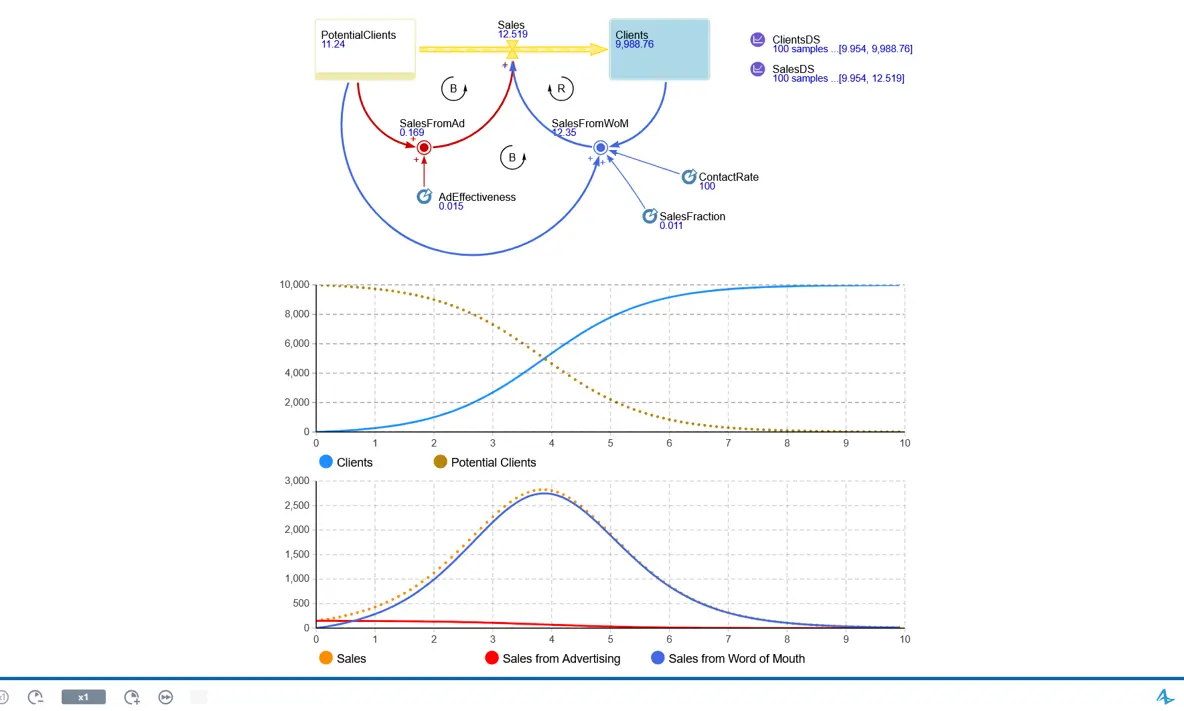
Marketing
Consumer behavior, market dynamics, and promotion analysis.
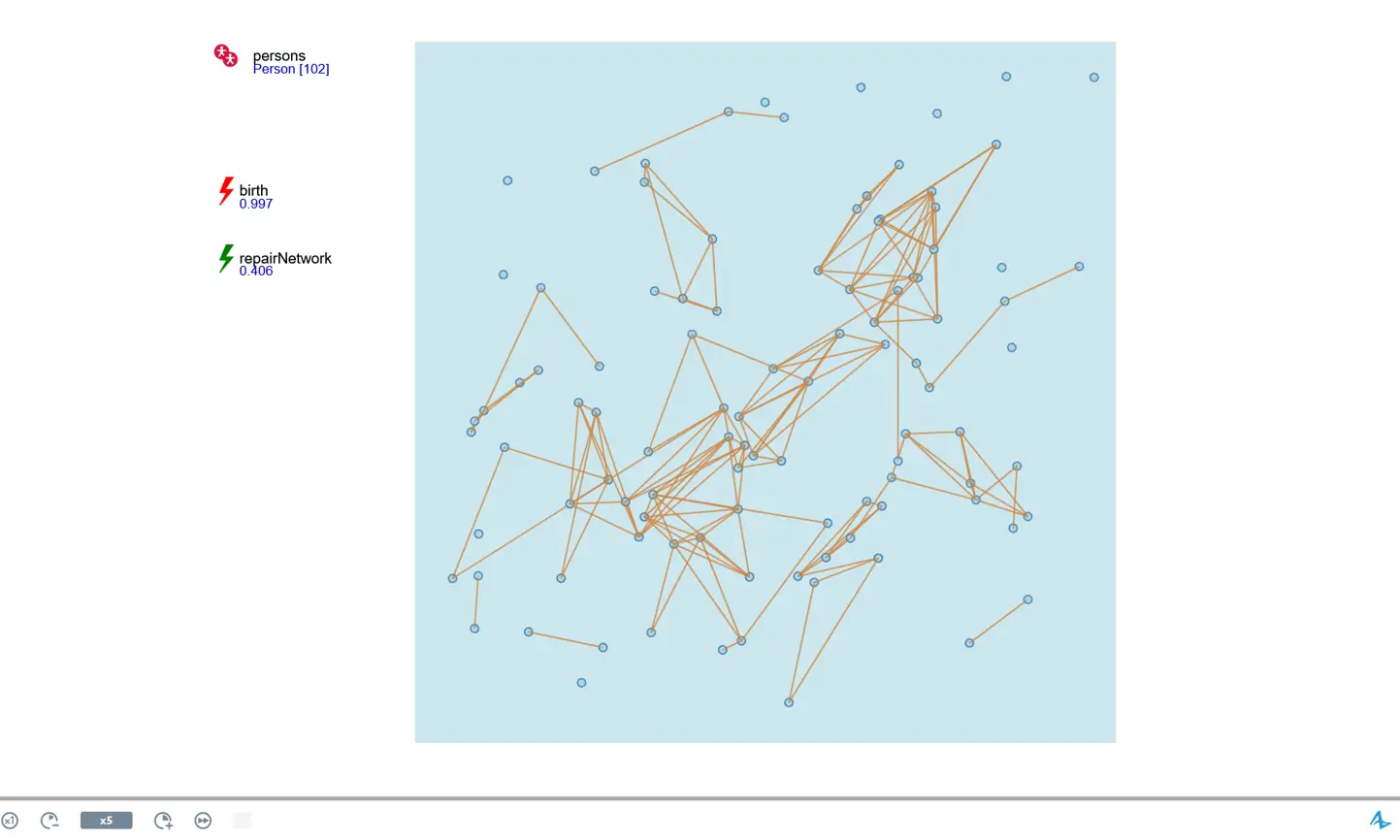
Social Processes
Population dynamics, policy evaluation, and social behavior.
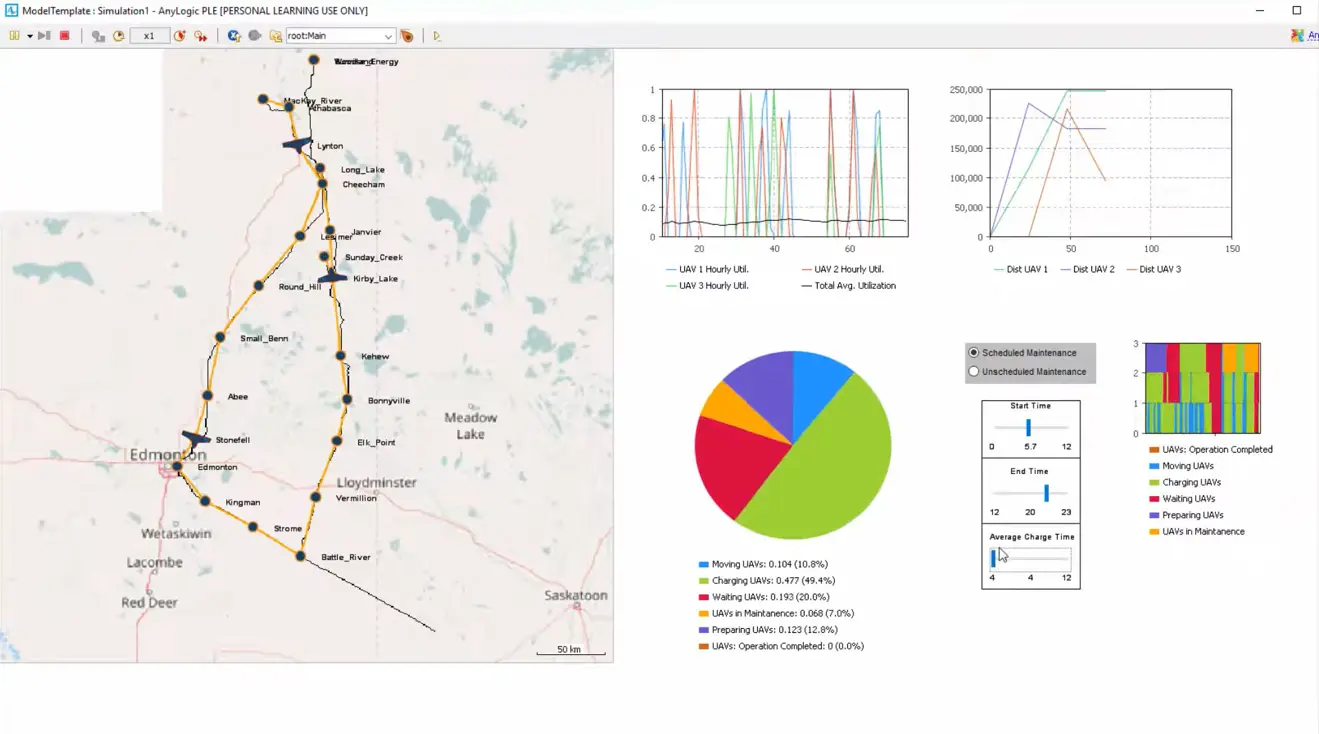
Defense
Maintenance scheduling, resource planning, and defense logistics simulation
AnyLogic Editions
Choose the AnyLogic edition that fits your needs, from learning and evaluation to academic research and professional business applications.
AnyLogic Professional
The commercial edition for engineers, analysts, and simulation teams working on business projects. Build models without size limitations, combine multiple simulation methods, and use industry-specific libraries with interactive 2D and 3D visualization. Export standalone simulation applications or publish models to AnyLogic Online for sharing and experimentation.

AnyLogic University Researcher
The edition for academic researchers at accredited universities. Develop research models without the model-size restrictions of the Personal Learning Edition, combining discrete-event simulation, agent-based modeling, and system dynamics. Access industry-specific libraries, visualization, and advanced experiments to investigate complex systems and compare alternative scenarios.